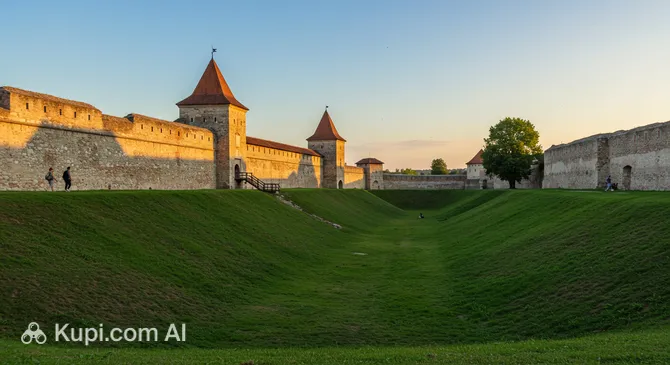
Suceava Fortress, often called the Throne Fortress, is a monumental medieval citadel located on a picturesque hill in the city of Suceava. This majestic site in Romania is more than just an architectural monument; it is a true symbol of Moldavian statehood. The fortress rises 70 meters above the eponymous river, offering guests a journey back to the era of great voivodes.
Suceava Fortress. Illustration.
Source: Kupi.com AI
Traveller photos:
For nearly two centuries, this powerful fortification served as the main residence of the Moldavian rulers. It hosted grand coronations and witnessed crucial political decisions. Surrounded by a deep moat and massive walls that were reinforced multiple times, the citadel embodied the military strength and grandeur of the historic Bukovina region.
Today, Suceava Fortress is a unique open-air museum. Visitors can stroll through restored ruins, explore courtyards, and see the bastions. It is a magnet for history enthusiasts and those wishing to feel the spirit of the past while enjoying panoramas of one of the country's most beautiful corners.
Contacts
When planning a visit to Suceava Fortress, it is recommended to check for current information at the tourist information center in the city of Suceava. As the site is a significant historical monument and scheduled restoration work is periodically carried out on its grounds, access to certain parts of the citadel may change.
How to contact
Contact
Address
Strada Cetății, Suceava, Romania
What to Do
A walk through the grounds of Suceava Fortress is an opportunity to appreciate the scale of medieval architecture and explore the ruins of the Prince's Court. Visitors can examine the remains of residential quarters, council halls, and ceremonial rooms, which help imagine how Moldavian rulers lived centuries ago.
Special attention should be paid to the massive defensive walls and the Alexander Lăpușneanu Tower. Thanks to the citadel's strategic hilltop location, its platforms offer breathtaking panoramic views of the Suceava River valley and the surrounding hills. It is an ideal spot for taking in the regional landscapes and capturing atmospheric photos.
The fortress regularly hosts themed exhibitions and cultural festivals that bring the history of the ancient principality to life. Guests can view archaeological finds and learn more about the daily life and traditions of Bukovina, making a visit to the fortress both educational and engaging.
Getting There
The famous citadel is located on the eastern outskirts of Suceava at Strada Cetății. Getting there from the city center is quite simple: a walk will take about 15–20 minutes. Keep in mind that the fortress is on a hill, so the walking route involves an uphill climb, which is rewarded by beautiful views of the surrounding area.
For those who prefer comfort, a taxi or private car is an excellent option. The city of Suceava has a well-developed road network connecting the Bukovina region with other important centers in Romania. It is best to plan your visit during daylight hours to fully appreciate the Suceava River valley landscapes and the scale of the ancient walls.
Nearest city: Suceava
History & Facts
The history of Suceava Fortress began at the end of the 14th century when the Moldavian prince Petru I Mușat laid the foundations for the first stone fortification. The fortress was first officially mentioned in documents in 1388. The original structure was quadrilateral with massive walls and protected by a deep moat, making it a formidable obstacle for invaders.
The citadel's golden age is linked to the name of the great voivode Stephen the Great (Ştefan cel Mare), who transformed it into a powerful defensive hub in the 15th century. Under his rule, additional rings of outer walls and bastions were constructed. The fortress successfully withstood numerous sieges, including attacks by Ottoman forces, remaining an impregnable stronghold for a long time.
Unfortunately, in 1675, the fortress was severely damaged. The monument's revival began only at the turn of the 19th and 20th centuries thanks to the efforts of Austrian architect Karl Adolf Romstorfer, who conducted extensive research and conservation of the ruins. The modern appearance of Suceava Fortress is the result of careful restoration that preserved the authenticity of the ancient stones for future generations.
Time Needed
To leisurely explore all the key features of Suceava Fortress, including the ruins of the Prince's Court and the powerful defensive bastions, visitors typically need about 2–3 hours. This is enough time for a relaxed walk around the grounds and getting to know the main historical details.
If you plan to visit themed exhibitions, take part in cultural events, or simply want to spend more time enjoying the panoramic views of the river valley from the hilltop, it is worth setting aside 3–4 hours for your visit. The pace of your tour largely depends on your interest in medieval architecture and your desire to immerse yourself in the atmosphere of Bukovina.
Working Hours
Since Suceava Fortress operates as an open-air museum, it is usually open to visitors during daylight hours. However, exact opening hours can vary depending on the season and scheduled restoration work on the grounds.
Before planning a trip to Suceava, it is recommended to check the fortress's current schedule on official tourism resources or the museum's website. This will help avoid any issues and allow you to fully enjoy your tour of this majestic historical monument.
Nearby
A visit to Suceava Fortress can easily be combined with a stroll to other interesting spots in the city, making your introduction to Romania even richer. Just a few minutes' walk from the citadel are sites well worth the attention of any tourist interested in the culture and nature of the region.