Support

Frumoasa Monastery

About

In a quiet corner of Iași, in eastern Romania, stands the Frumoasa Monastery — an active men's cloister whose name translates from Romanian as "Beautiful." It is not just a religious site, but an outstanding 19th-century architectural monument that surprises with its harmonious blend of Moldavian canons and neoclassical style.
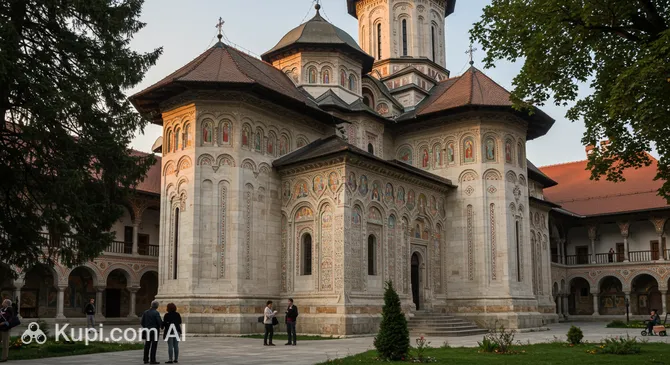
Frumoasa Monastery. Illustration.
Source: Kupi.com AI

Traveler photos:

The main church of the monastery, built between 1836 and 1839, stands out among other temples in the region with its exotic silhouette. Instead of traditional domes, one can see four cupolas resembling Ukrainian church onion domes, while the western facade is adorned with a strict Doric portico. The interior space, divided by majestic arches, creates an atmosphere of solemnity and deep peace.

Surrounded by sturdy walls, the complex is a cozy ensemble that includes residential buildings and well-tended gardens. Frumoasa Monastery is rightfully considered one of the city's most significant attractions, drawing pilgrims and history buffs alike with its unique aesthetics and peaceful energy.

Contacts

You can contact the monastery representatives or find information about upcoming feast days by phone or via the official website. The monastery is located in a quiet area of the city, making it easily accessible for pilgrims.

How to contactContact
AddressStr. Radu Vodă 1, Iași, Romania
Phone+40 232 279 457
Websitefrumoasa.mmb.ro

What to Do

Visiting Frumoasa Monastery is, above all, an opportunity to slow down and experience an atmosphere of spirituality. The main activity here is exploring the central church: be sure to pay attention to the unique frescoes and icons, as well as architectural details like pilasters and semi-columns. If your visit coincides with a service, you can experience the living traditions of Orthodox prayer and listen to liturgical chanting.

The monastery grounds are perfect for peaceful walks. It is pleasant to stroll along the monastery walls, admiring the gardens, which are lush with greenery in the summer. This is an excellent spot for those seeking solitude and inspiration for photography: the unusual domes and classical portico provide beautiful shots in any season.

In the monastery shop, you can purchase blessed icons, candles, and locally made products. The hospitable atmosphere sometimes allows for conversation with the residents to learn more about monastic life. In the summer, spiritual music concerts are occasionally held here, turning the monastery into a cultural hub for residents and visitors alike.

Getting There

Reaching this secluded spot in the city's historical center is easy. The monastery is located at Str. Radu Vodă 1. The simplest way is to use public transport: trams No. 1 and No. 7 or buses stopping at Teiul Doamnei or Radu Voda are suitable. It is just a five-minute walk from the stop to the monastery entrance.

If you prefer comfort, a taxi from the city center will get you there in 10–15 minutes. For travelers arriving at Iași Airport (IAS), it is most convenient to take a taxi (the trip takes about 20 minutes and costs approximately 20–30 RON) or take bus No. 50 to the center and then walk a short distance.

For those who enjoy walking, the route from iconic sites such as the Palace of Culture takes about 15–20 minutes. The path leads through interesting city streets, allowing you to gradually immerse yourself in the atmosphere of the old town. Parking spaces are available near the monastery complex for those traveling by car.

Nearest city: Iasi

History & Facts

The history of this site began with Hetman Melentie Balica, who founded the first settlement here; however, the monastery acquired the appearance we see today much later. Between 1836 and 1839, under the leadership of Abbot Ioasaf Voinescu, the complex was completely rebuilt, turning into a true masterpiece of the neoclassical style.

The architectural design of the church is unique for the region: it harmoniously blends Moldavian traditions with the influence of Russian church architecture from the turn of the 18th and 19th centuries. Special attention is drawn to the classical elements — majestic porticos with Doric columns and strict pediments, which give the building a sense of monumentality and nobility uncommon in many other churches of that period.

Throughout the 19th century, Frumoasa Monastery remained a vital spiritual landmark. Despite fires and the need for restoration, the cloister managed to preserve its original structure and unique diagonal vault arches. Today, it is an active men's monastery that carefully guards centuries-old traditions and continues to play an important role in the region's cultural history.

Time Needed

To leisurely explore the Frumoasa Monastery, 1–2 hours is usually enough. This time will suffice to study the architectural details of the main church, admire the interior decorations, and walk through the well-maintained grounds while enjoying the silence.

If you plan to attend a service or wish to linger longer in the monastery garden for meditation and relaxation, it is worth allowing a bit more time. For those visiting the site as part of a busy tour of the city's highlights, a brief look at the exterior and the main icons will take about 45 minutes.

Working Hours

The monastery is open to visitors daily. Generally, the monastery gates are open from 08:00 to 20:00 in the summer and until 18:00 in winter. However, the schedule may change depending on church holidays and private services. Before visiting, it is recommended to check for up-to-date information on the official website or by phone.

Nearby

The monastery's location allows tourists to easily combine a visit to the cloister with an exploration of other iconic city sites. A walk through the surrounding area will reveal a rich palette of architectural styles — from ancient bridges to magnificent palaces and cathedrals.

Exploring the nearby streets helps to better feel the spirit of the past. Within walking distance are both important religious sites and monuments of secular architecture that are the pride of local culture.

NameDistance
Cetățuia Monastery0.9 km
Palas Iași1.9 km
Palas Public Garden1.9 km
Palace of Culture2 km
Iulius Mall2.2 km
Regina Maria Municipal Museum Burchi-Septilici2.3 km
Iași Metropolitan Cathedral2.5 km

Reached the end of the page?

That means the route is fully explored