Support

Arco da Vila

About

The majestic Arco da Vila is more than just an architectural monument; it is the grand entrance to the historic heart of Faro. Built in 1812 at the behest of Bishop Francisco Gomes do Avelar, this Neoclassical structure replaced the ancient Moorish gates. The project was designed by the renowned Italian architect Francesco Fabri, bringing a refined Mediterranean flair to the Algarve region.

The arch is a monumental portal crowned by an elegant niche containing a statue of Thomas Aquinas, crafted from white marble. The facade is adorned with classical columns and a pediment leading into a picturesque bell tower with a clock. One of the most recognizable features of this site is the massive storks' nests at the very top, adding a unique sense of coziness and natural charm to the historic landmark.
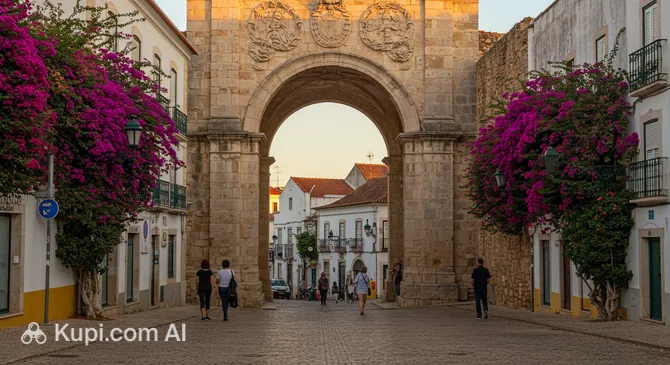
Arco da Vila. Illustration.
Source: Kupi.com AI

Traveler photos:

Today, it stands as one of the main landmarks that Portugal is proud of. Immediately behind the arch, the cobbled streets of the Old Town begin, where the breath of the Moorish past can still be felt among medieval walls. A tourist information center is also located near the entrance, where you can learn more about the history of this amazing place.

Contacts

To clarify visiting details or obtain additional information about events in the historic center, you can use the official contact details:

How to contactContact
AddressR. da Misericórdia 8, 8000-168 Faro, Portugal
Phone+351 289 800 489
Websitewww.visitalgarve.pt

What to Do

The first thing to do at Arco da Vila is to walk leisurely under its high vaults, transitioning from the bustling modern part of the city to the peace and quiet of the medieval quarters. Be sure to look up to admire the details: from the marble statue of the saint to the massive storks' nests that have become an integral part of the decor. This spot is considered one of the most photogenic in the city, so don’t forget to take a few shots against the backdrop of the classical columns and the ancient clock.

Beyond the arch, the narrow cobbled streets of the Old Town await, perfect for wandering while exploring the remains of the Moorish walls. Within walking distance are other important attractions, such as the Bishop's Palace and the Cathedral. If you're interested in architectural curiosities, look for the nearby Carmo Church with its famous "narrow house."

For those who want to get the most out of their walk, we recommend stopping by the tourist information office right at the gate. There, you can pick up walking route maps that will lead you through Manuel Bívar Garden to the picturesque harbor. An evening stroll here is particularly pleasant: the soft light of the old street lamps creates a truly magical atmosphere, perfect for experiencing the culture of the Algarve.

Getting There

The Arco da Vila landmark is located in the very heart of the city at R. da Misericórdia 8, in close proximity to the tourist information office. Thanks to its convenient location, it is easily accessible on foot from most key points in the city. A trip from Faro Airport takes about 10–15 minutes, and it is no more than a 20-minute walk from the train station.

If you are traveling from other parts of the Algarve region or Portugal, use the buses or trains going to the Faro station. From the station, simply head towards the waterfront along Rua da Misericórdia. GPS coordinates: 37.0146777, -7.9348433.

For those who prefer a car, there are parking areas in the city center near the Old Town, from where the arch is visible from afar. You can also always use local taxis or order a ride via mobile apps to comfortably reach the main gates of the historic center.

Nearest city: Faro

History & Facts

The majestic Arco da Vila was erected in 1812, but its history goes much deeper. It was built on the site of medieval Moorish gates that served as a key entrance to the city from the sea during the Middle Ages. The new Neoclassical look was initiated by Bishop Francisco Gomes do Avelar, and the project was brought to life by the talented Italian architect Francesco Fabri.

The construction of the arch was part of a large-scale reconstruction process following the devastating earthquakes of 1722 and 1755. The city of Faro itself, known in ancient times as Ossonoba, has a rich past: it originated in the pre-Roman period, flourished under the Romans as an important port, and from the 7th to the 13th century was under the rule of the Arabs, who strengthened its defensive structures. In 1249, King Afonso III took the city, laying the foundations for Faro's modern Portuguese identity.

Today, the arch is considered a symbol of the cultural synthesis of different eras. Its architecture harmoniously combines elements of Italian Neoclassicism and ancient motifs that replaced Moorish traditions. The importance of this monument is underscored by modern investment: in 2026, significant funds were allocated for its renovation to preserve this unique heritage for future generations of tourists.

Time Needed

Usually, 10–15 minutes is enough to view Arco da Vila, take commemorative photos, and study the details of its Neoclassical facade. It is an ideal stop during a walking tour of the center.

However, given that the arch is the main gateway to the Old Town, most travelers spend 30 to 60 minutes at this site. This time includes a visit to the adjacent tourist office and the start of a leisurely exploration of the historic streets that open up immediately beyond the arched passage.

Working Hours

Since Arco da Vila is part of the urban architecture and serves as a public passage into the Old Town, it is accessible 24/7. You can admire its beauty and pass through the gates at any time convenient for you, whether it's early morning or late evening.

The attraction is open 24 hours a day every day of the week, from Monday to Sunday. This allows tourists to plan their route with maximum flexibility and enjoy the view of the illuminated facade even after sunset.

Open 24 hours

Nearby

Exploring the surroundings of Arco da Vila allows for a deeper immersion into the atmosphere of Portuguese history and architecture. Immediately behind the arch lies a labyrinth of Old Town streets, where literally every step leads to a new discovery.

A walk through this area becomes even more fascinating if you visit the ancient walls or nearby architectural monuments that have guarded the peace of local residents for centuries.

NameDistance
ATO Restaurante0.1 km
LAB Terrace Sunset Bar0.2 km
Game Over0.2 km
Faro Municipal Museum0.2 km
Algarve Life Sciences Center0.2 km
Ria Formosa Islands Boat Tours0.2 km
Church of Santa Maria0.2 km

Reached the end of the page?

That means the route is fully explored