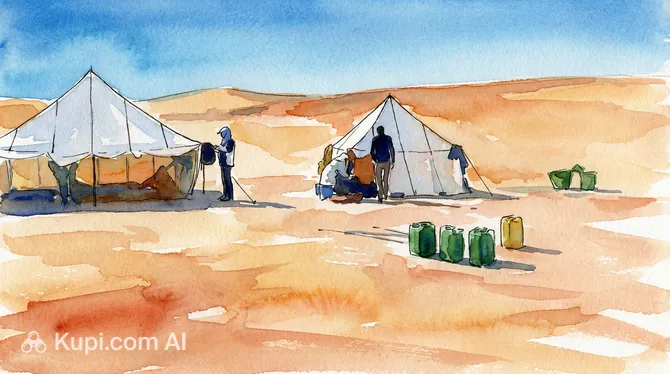
Tifariti is an amazing oasis city lost amidst the vast expanses of the northeastern part of Western Sahara, in an area under the administration of Morocco. This place possesses a unique atmosphere of "desert coziness," where harsh nature meets the human drive for creation. With a population of about 3,000, the city has become a true symbol of the region's cultural revival, transforming from a seasonal Bedouin camp into an important administrative and educational center.
Tifariti. Illustration.
Source: Kupi.com AI
Geographically, Tifariti is surrounded by majestic sand dunes and dry riverbeds—wadis—creating a sense of an isolated paradise for adventure seekers. The city's rich heritage dates back to the Neolithic era, as evidenced by numerous archaeological finds in its vicinity. Today, the settlement's appearance combines modern residential neighborhoods, such as "Tadamoun" and "Salam," with social infrastructure facilities—schools, hospitals, and a mosque.
For the traveler, Tifariti is primarily interesting as an open-air museum. Every year, it hosts the international arts festival ARTifariti, which has decorated the streets of the oasis with installations by artists from all over the world. We invite you to discover this unique corner of the Sahara, where ancient history and contemporary art intertwine under clear starry skies.
Weather Overview
The climate in Tifariti is typical of the central Sahara and is characterized by extreme dryness and an abundance of sunlight. One of the main features of the local weather in the city is significant daily temperature fluctuations: after a hot day in the desert, cool and sometimes truly cold nights set in.
The summer months, especially July and August, are characterized by intense heat, with temperatures often rising above 40°C. Winter in Tifariti is milder and more comfortable for travel: in January, the average daytime temperature is about 21.5°C, but at night it can drop to 9°C. Precipitation is very rare here, and for most of the year, the sky remains perfectly clear.
For trip planning, it is best to choose periods from October to April, when the daytime heat is not as exhausting. During this time of year, the weather is ideal both for studying rock art in the surroundings of the oasis and for evening gatherings by the fire under the infinite dome of stars.
Average monthly temperature
Average monthly precipitation
Interesting Facts
The surroundings of Tifariti are considered one of the world's largest open-air archaeological museums due to thousands of Neolithic petroglyphs.
Since 2007, the city has annually hosted the international ARTifariti festival, turning the desert oasis into a center for world street art.
The city is home to its own University of Tifariti, which serves as the main educational hub for the region's nomadic population.
The Erqueyez Archaeological Park features over a hundred caves with Paleolithic rock paintings and traces of ancient stone tool production.
Just 15 kilometers south of the city lies the border with Mauritania, which historically made this area an important point on caravan routes.
How to Get There
The transport accessibility of Tifariti is defined by its remote location in the heart of the desert, making the journey here a true adventure. Main routes lead from major regional centers, and planning a trip requires a careful approach. Detailed information on how to get to the city will help you better plan your itinerary.
There is no regular air service directly to the oasis. Travelers are advised to use airports in neighboring regions, such as the airport in Tindouf, Algeria, from where ground transfers are organized. Only 4WD vehicles with high ground clearance should be used to cross desert sections, as roads are often covered by sand.
Railway communication is not developed in this part of the Sahara. The main way to travel remains organized car tours or private transfers from the city of Smara (about 177 km to the west) or from the Mauritanian direction. Traveling as part of a caravan or with an experienced local guide is the most reliable and safe way to reach this remote oasis.
Station
Passenger traffic
Distance
Tindouf railway station
2
298 km
Main Attractions
The main attractions of Tifariti are inextricably linked to the amazing natural and cultural context of the region. One of the most significant locations is the Erqueyez Archaeological Park. This site represents a unique concentration of prehistoric heritage: here, you can see ancient rock paintings, petroglyphs, and numerous artifacts preserved in the natural desert environment for millennia.
The city of Tifariti itself can be called an open-air gallery. Walking through its streets, you will certainly come across unusual art objects created by participants of the ARTifariti international festival. These installations give the oasis a unique look, turning building facades and desert vacant lots into canvases for contemporary artists.
The Government Quarter also presents architectural interest. It houses the parliament building, the central mosque, and a school, with architecture adapted to the extreme conditions of the Sahara. The city's modern residential areas demonstrate how water desalination technologies and clever planning allow for the creation of a comfortable living environment in the heart of the desert.
Local Cuisine
The gastronomy of Tifariti is a hymn to the traditions of the Western Sahara nomads. The local cuisine is simple yet incredibly filling and aromatic. The diet's foundation consists of lamb and camel meat, which are often cooked over an open fire, acquiring a unique smoky aroma. Hospitality here is elevated to a cult, and any meal turns into a slow-paced ritual.
You should definitely try the classic couscous with vegetables and spices, as well as unique desserts made from local dates. In desert conditions, food is often prepared slowly, allowing the spices to fully reveal their flavor. A traditional meal usually takes place with family or guests, emphasizing the communal spirit of the oasis residents.
As for drinks, mint tea takes center stage here. It is brewed strong and sweet, served in small glasses with a high foam. Strong coffee is also popular, helping to invigorate during the hot daytime hours. While the city doesn't have conventional restaurants, you will always find the best dishes in guesthouses, where food is prepared according to old recipes with sincere care for the guest.
Travel Tips
Traveling to Tifariti is a unique experience that requires careful preparation. To ensure your trip goes smoothly and leaves only pleasant impressions, check out our practical tips.
Clothing and Essentials: Choose light, covered clothing made of natural fabrics to protect from the sun during the day and warm clothes for cool nights. Be sure to bring comfortable closed shoes, a hat, and sunglasses.
Transport: A four-wheel-drive vehicle is necessary for moving around the region. It is recommended to hire a local guide who knows the desert trails and terrain features well.
Finance: The Moroccan Dirham is in use. Cashless payments are practically impossible, so carry a sufficient supply of cash in small bills.
Health and Safety: Always carry a supply of drinking water (at least 3 liters per person). There are few pharmacies in the city, so pack an extensive personal first-aid kit.
Communication: The main language is Arabic (Hassaniya); many understand Spanish and French. Learning a few basic phrases in Arabic is highly appreciated by the locals.
Local Etiquette: Greetings are an important part of the culture. Be prepared for long, polite inquiries about health and affairs. Always ask for permission before photographing people.
What to Avoid: Do not venture into the desert alone without a navigator and communication. Avoid discussing political topics and show respect for local religious customs.
Important Tip: Try to time your visit to coincide with the dates of the ARTifariti festival to see the city in its most vibrant and creative form.
Following these simple rules will help you feel like a welcome guest and fully enjoy the magic of Tifariti!
Entertainment & Nightlife
Entertainment in Tifariti is of a cultural and contemplative nature, making it an ideal place for those seeking solitude and new meanings. The main event in the city's life is the international festival ARTifariti. During this period, the oasis comes alive: tourists can not only observe the creation of large-scale art objects but also participate in masterclasses led by famous artists.
Unlike large metropolises, the nightlife here is devoid of the noise of clubs and bars. The main show begins after sunset, when an incredibly bright starry sky opens up over the desert. The clarity of the air and the lack of light pollution make the city's surroundings an ideal platform for astronomical observations and meditative evening walks through the oasis.
Daytime leisure is usually focused on excursions to archaeological sites and interacting with hospitable locals. For nature lovers, trips are organized to the monuments of the Tifariti wadis, where you can enjoy the silence of the desert and see unique geological formations. This is a place for those who value authenticity and want to experience the untouched beauty of the Sahara.
Parks & Museums
In Tifariti, the role of museums and parks is performed by nature itself, complemented by the creations of human hands. The most significant site is the Erqueyez Archaeological Park. This is a true open-air museum where evidence of the lives of people who lived here thousands of years ago is preserved on rock massifs. Tourists can spend hours studying rock paintings depicting animals and hunting scenes from the Paleolithic era.
For those interested in modern culture, the entire city serves as a gallery. Projects created as part of the ARTifariti festival are scattered throughout the oasis, turning ordinary walks into a search for hidden art objects. There is also a small museum in the city dedicated to local history and a university campus, which is the center of the region's intellectual life.
Although there are no classic green parks in Tifariti, their place is taken by picturesque wadis—valleys of dried-up rivers. A walk to the monuments of the Tifariti wadis allows you to see majestic natural sculptures made of sand and stone, which locals revere as natural recreation areas. These are ideal places to feel the scale and silence of the great desert.
Getting Around
The transport system in Tifariti is adapted to the harsh conditions of the Sahara and the small size of the settlement. There is no typical urban public transport—no metro, buses, or trams. Moving within the city is most often done on foot, as all major social facilities are within walking distance of each other.
For trips between districts or to remote archaeological sites, locals and tourists use 4WD vehicles. This is the only reliable form of transport capable of navigating sandy sections and rocky roads. If you do not have your own off-road vehicle, you can arrange a trip with local drivers or order a transfer through a guesthouse.
Intercity communication is represented by private jeep services that connect Tifariti with Smara or Tindouf. Tickets and clear schedules are non-existent, so trips are usually planned in advance through acquaintances or guides. For travelers, this is a great opportunity to feel the spirit of a real desert expedition, where every route is unique.
Accommodation
The traditional hotel industry in Tifariti is still in its formative stages, which gives the trip a special flavor. You won't find chain hotels here; however, the city is famous for its Bedouin hospitality. The main accommodation option for tourists is guesthouses, which allow for full immersion into the local culture and lifestyle.
For those who prefer more modern conditions, it's worth looking at the "Tadamoun" and "Salam" residential neighborhoods. Apartments or rooms for temporary stays are sometimes offered here, equipped with a necessary minimum of amenities. This is a good option for those planning to stay in the city during the arts festival.
Given the limited number of places, we recommend arranging accommodation in advance, especially during cultural events. Often, tour operators handle the accommodation issue, offering stays in traditional tents or guest rooms with local families, which guarantees an authentic experience and delicious homemade food.
Nearby Cities
Tifariti is an excellent starting point for those who want to further explore the rugged beauty of the Saharan region. Despite its remoteness, the city's surroundings offer several interesting destinations that can be visited as part of a desert expedition.
One of the most accessible destinations is the town of Bir Mogrein, located 145 kilometers away in Mauritania. This small settlement serves as an important crossroads of desert paths and allows you to get acquainted with the life of Mauritanian Bedouins. For a longer trip, El Aaiún, the region's largest city, is suitable, where modern infrastructure meets colorful markets and the ocean coast.
Exploring the surroundings of Tifariti requires good preparation and the accompaniment of professional guides, but the impressions gifted by the endless horizons and ancient wadi beds are worth every kilometer traveled. Discover new horizons by following the paths of ancient caravans.
Shopping & Souvenirs
Shopping in Tifariti is primarily an opportunity to purchase unique, authentic items created by the hands of local artisans. There are no large shopping centers here, but local markets offer goods that cannot be found anywhere else. Tourists' attention is usually drawn to Bedouin handicrafts: jewelry, leather bags, and traditional fabrics with characteristic Saharan patterns.
Souvenirs related to the ARTifariti festival are especially popular. These can be small replicas of art objects or commemorative accessories created during cultural events. It's also worth bringing back the freshest dates and aromatic spice blends from the oasis, which form the basis of local cuisine and make excellent gifts for gourmets.
Shops and stalls usually operate on flexible schedules, focusing on daylight and siestas during the hot hours. Payment is predominantly made in cash in the local currency, so it's worth taking care of change in advance. Remember that buying at a local market is not just an exchange of money for goods, but also an important social act, often accompanied by friendly conversation with the seller.