Support

Mausoleum of Mohammed V

About

A majestic snow-white monument rising above the capital's skyline, the Mausoleum of Mohammed V is one of the most significant cultural shrines carefully preserved by Morocco. Located in the heart of Rabat, this tomb is more than just an architectural site; it is a powerful symbol of national pride and the journey toward sovereignty.
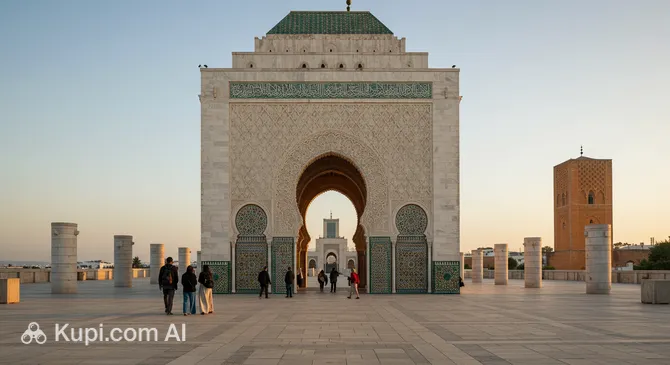
Mausoleum of Mohammed V. Illustration.
Source: Kupi.com AI

Traveler photos:

The building is a true masterpiece of Moorish architecture. Faced with the purest Italian marble, the mausoleum is topped with a pyramidal roof of bright green tiles—a color deeply revered in Islamic tradition. The whiteness of the walls contrasts strikingly with the sky, creating an image of purity and eternity.

This site serves as the final resting place for the country's prominent leaders, reflecting the people's deep respect for their history and the continuity of generations. For tourists, the mausoleum offers a unique opportunity to experience the living heritage of the Arab world in an atmosphere of peace and reverence.

Contacts

For convenience in planning your route, below are the main contact details and coordinates of this memorial site. Please note that entry to the complex grounds is free for all visitors.

How to contactContact
Address25FH+3C2, Rabat, Morocco

What to Do

Visiting the complex offers a rare chance to see traditional Moroccan art in all its glory. Unlike many religious sites in the country, the mausoleum is open to visitors of all faiths. Once inside, be sure to look up at the ceiling: it is adorned with incredibly intricate cedar wood carvings and gold leaf elements that are breathtaking in their craftsmanship.

From the galleries circling the main hall, visitors can look down upon the majestic white marble sarcophagus of King Mohammed V. Below, in the quiet of the hall, a Quran reader is constantly present, whose voice creates a special meditative atmosphere. On the walls, you can observe zellige—traditional Moroccan mosaic where every single piece is laid by hand.

After touring the interiors, it is worth walking across the plaza to the Hassan Tower. This is a massive unfinished minaret surrounded by a forest of hundreds of stone columns—the remains of a mosque that was intended to be the largest in the world. The contrast between the elegant modern mausoleum and the rugged grandeur of the ancient ruins leaves a lasting impression.

Getting There

Finding this architectural complex is easy: the Mausoleum of Mohammed V is located in the eastern part of the city, on the picturesque banks of the Bou Regreg River. It is situated in the immediate vicinity of the famous Hassan Tower, making these two attractions ideal for a combined visit.

You can reach the site from central districts by taxi—the fastest and most comfortable way to travel around the city. You can also use the city tram network or buses heading toward the waterfront. The entrance to the memorial grounds is easy to spot thanks to the royal guards on horseback in colorful traditional costumes, who stand guard at the gates.

Nearest city: Rabat

History & Facts

The history of this site is inextricably linked to the figure of Mohammed V, who is often called the "Father of Independence." It was he who led the country's efforts toward sovereignty, successfully uniting the people during a pivotal historical period. In 1957, he changed his title from Sultan to King, marking an important step in the development of the modern state.

The site for the mausoleum was chosen for its deep symbolism. It was on this very square, after returning from exile, that the King announced the long-awaited independence of the country to his subjects. Since then, this territory has been considered sacred by the people of the Kingdom.

Following the monarch's passing in 1961, it was decided to create more than just a tomb, but a grand monument to serve as a place of remembrance for future generations. Today, alongside the founder of the dynasty, his sons—King Hassan II and Prince Moulay Abdallah—also rest here, highlighting the continuity of the royal lineage.

Time Needed

Most travelers need about 1–2 hours to unhurriedly admire the interior decoration of the mausoleum and stroll across the adjacent colonnaded plaza. This is enough time to take photos, examine the mosaic details, and visit the neighboring Hassan Tower.

If you plan your visit for the evening, consider allowing a bit more time: as dusk falls, the artistic lighting is turned on, transforming the appearance of the complex and creating a completely different, solemn atmosphere.

Working Hours

When planning your visit, please note that the complex is open daily. On weekdays, the doors are open from 8:00 AM to 6:00 PM, while on Saturdays and Sundays, the visiting hours are slightly adjusted—from 8:15 AM to 5:45 PM.

DayWorking hours
Monday8:00 – 18:00
Tuesday8:00 – 18:00
Wednesday8:00 – 18:00
Thursday8:00 – 18:00
Friday8:00 – 18:00
Saturday8:15 – 17:45
Sunday8:15 – 17:45

Nearby

The location of the memorial complex allows tourists to see several iconic city landmarks in a single walk. Exploring the surrounding area will help you better experience the atmosphere of the capital and see the contrast between ancient ruins and well-kept parks.

NameDistance
Hassan Tower0.2 km
The Marina Steakhouse0.8 km
Bab Mrissa1.2 km
Rabat Medina1.2 km
Nouzhat Hassan Garden1.2 km
Rabat Grand Mosque1.2 km
Mohammed VI Museum of Modern and Contemporary Art1.3 km

Reached the end of the page?

That means the route is fully explored