Support

Statue of Grand Duke Vytautas

About

In the very heart of Kaunas stands the impressive Monument to Grand Duke Vytautas—one of the most significant historical landmarks carefully preserved by Lithuania. This monument is dedicated to "Vytautas the Great," a ruler whose reign marked the golden age of the Lithuanian state.
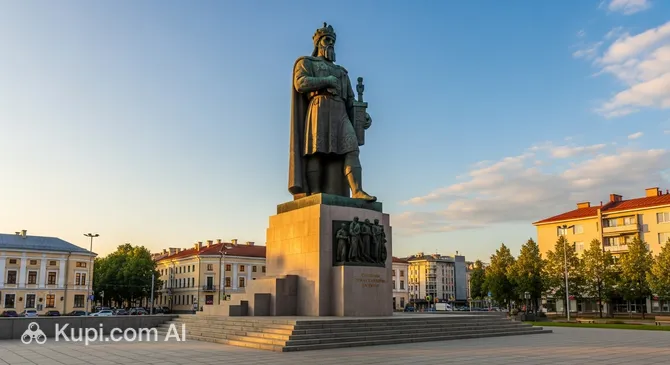
Statue of Grand Duke Vytautas. Illustration.
Source: Kupi.com AI

Traveler photos:

The statue, created in 1930, is striking in its power and detail. The Grand Duke is depicted in a majestic pose on a high pedestal supported by the figures of defeated opponents. This is a symbol of resilience and military glory, and the monument itself is considered an important example of art from the interwar period when the city served as the capital.

For tourists, this site is interesting not only as a historical object but also as an expressive element of the urban landscape. The monument blends seamlessly into the architectural ensemble of the center, inviting passersby to reflect on the glorious past of the Baltic lands.

Contacts

The monument is an open-access site, so it does not have a dedicated information service or phone number. However, up-to-date information about the city's cultural sites can be found on the official tourism portal. Below is the basic information for visiting this historic location.

How to contactContact
Address44251 Каунас, Литва
Websitegerve.lt

What to Do

Visiting this site is a great reason for a leisurely stroll through the historic center. You can take a closer look at the details of the sculptural group: the figures of defeated enemies on the pedestal are crafted with great skill and carry deep historical context. This is an ideal location for photography enthusiasts—the majestic Duke against the sky and cityscape looks very impressive.

Many travelers use the area near the monument as a resting spot before visiting the Vytautas the Great War Museum, which is just a few steps away. During the warmer months, it’s pleasant to sit on a bench here, watching the steady rhythm of city life and enjoying the atmosphere of old Kaunas.

The monument looks particularly interesting in the evening when the artistic lighting is turned on. It gives the monument a solemn and slightly mysterious look, making it a focal point for romantic walks. Thanks to open access, you can come here at any time to touch the living heritage of the past without the rush.

Getting There

Finding the monument is easy, as it is located in the central part of the city at 44251 Kaunas. If you are already walking along the famous Freedom Avenue (Laisvės alėja), a short walk toward the historic center while following signs for the War Museum will lead you right to it.

For those using public transport, any buses or trolleybuses going to the central stops will work. From Kaunas Airport, the most convenient way is to take bus No. 29 or a taxi, which takes about 20 minutes. If you arrive from Vilnius by train, you can take local transport from the station or walk while exploring the city's architecture.

Motorists should keep in mind that parking in the center is paid, and spaces may be limited during peak hours. In the warmer months, renting an electric scooter or a bicycle is a great option, allowing you to move quickly between the city's key landmarks.

Nearest city: Kaunas

History & Facts

This majestic monument was erected in 1930 when Kaunas served as the country's temporary capital. The occasion was exceptional—the 500th anniversary of the death of Grand Duke Vytautas, who is considered one of the most powerful and wise rulers in the region's history. It was under his rule that the borders of the Grand Duchy of Lithuania reached their maximum extent.

The architectural composition of the monument is filled with deep symbolism. At the Duke's feet are four figures of defeated enemies, among which a Teutonic Knight and an Eastern warrior are clearly recognizable. This is an allegorical reminder of Vytautas's victories, including the legendary Battle of Grunwald, which permanently changed the balance of power in Europe.

The monument's fate was difficult: it was dismantled during the Soviet period but carefully restored in 1992. Today, it is not just a sculpture but an important symbol of national identity, reminding the people of Lithuania of their state's golden age.

Time Needed

For a quick look at the monument itself and taking a few commemorative photos, you will need very little time—about 15–20 minutes. It is a convenient stop during a larger tour of the city's central streets.

If you decide to combine your visit with a trip to the nearby Vytautas the Great War Museum, you should set aside at least 1.5 hours in your schedule. This will allow you to study the sculpture's details unhurriedly and immerse yourself in the historical context presented in the museum halls.

Working Hours

Since the monument is located in an open-air public space, it is accessible for viewing 24 hours a day, 7 days a week. You can plan your visit for early morning to avoid tourist crowds or late evening to see the statue illuminated by artificial lights.

Although access to the monument itself is always open, we recommend checking the official website of the city's cultural resources before your trip to learn about any possible ceremonial events or restoration work in the area.

Open 24 hours

Nearby

The monument's location in the heart of the city makes it an ideal starting point for further exploration of the region's cultural treasures. A walk through the surrounding area will allow you to dive deeper into the atmosphere of interwar architecture and ancient history.

NameDistance
Tadas Ivanauskas Zoological Museum0.1 km
Bakes'n'Shakes City0.1 km
DIA0.3 km
Džem'pub0.4 km
Devils' Museum0.4 km
Vytautas the Great War Museum0.4 km
M. K. Čiurlionis National Museum of Art0.5 km

Reached the end of the page?

That means the route is fully explored