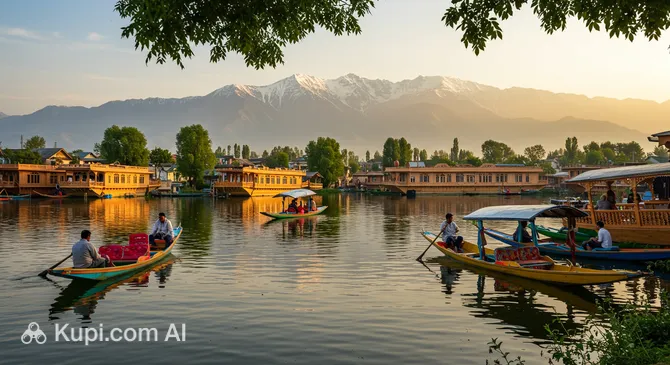
Mirror-like waters reflecting the snow-capped Himalayan peaks and a tranquil rhythm of life—Dal Lake is rightfully considered the "jewel in the crown" of Kashmir. Located in the heart of Srinagar in India, this lake, the second largest in the state of Jammu and Kashmir at approximately 22 square kilometers, is a unique ecosystem where nature is closely intertwined with the daily lives of local residents.
Dal Lake. Illustration.
Source: Kupi.com AI
Traveller photos:
This place is often called the "Venice of the East" due to its intricate labyrinth of canals, where hundreds of shikaras—traditional carved wooden boats—glide gracefully. Life here never stands still: bustling trade takes place at floating markets, and along the 15.5-kilometer shoreline, the famous gardens planted during the Mughal era flourish.
Dal Lake is more than just a tourist attraction; it is the true pulse of the region. Here, you can find floating vegetable gardens and entire neighborhoods of houseboats—residential boat-homes that have become a symbol of Kashmiri hospitality. The combination of majestic mountains, quiet waters, and rich history makes this a must-visit for every traveler.
Contacts
When planning a visit to Dal Lake in Srinagar, it is recommended to check the latest information on available boat tours and services in advance. As the lake is an open natural site, there may not be a single official resource; however, local tourist centers are always ready to assist with organizing your stay.
We strongly advise confirming houseboat booking details and shikara rental rates just before your trip to ensure your journey through India is as comfortable as possible.
The primary adventure that draws travelers to Srinagar is a ride on a shikara. These ornate wooden boats, with their distinctive heart-shaped oars, glide softly across the water, allowing you to fully enjoy the silence and beauty of the surrounding mountains. Be sure to ask your boatman to take you to the floating vegetable market: trade begins here at dawn right from the boats, creating an incredibly colorful spectacle.
Exploring the lake is incomplete without visiting the floating villages. Here, you can see how locals masterfully tend to "floating gardens" and peek into workshops where unique Kashmiri handicrafts are created. For those wishing to dive deeper into the atmosphere, staying overnight in one of the luxury houseboats—cedar-wood residential boats furnished with carved furniture—is an excellent choice.
Your water route should be complemented by a walk along the shore to the famous Mughal Gardens—Shalimar Bagh and Nishat Bagh. From the water, you also get magnificent panoramic views of the Shankaracharya Temple and the ancient Hari Parbat Fort towering over the city.
Getting There
Dal Lake is located in the very heart of Srinagar, making it easily accessible from any part of the city. The main transport hub and primary starting point for water routes is Ghat No. 1, located in the bustling Dalgate area. You can quickly reach it by taxi, auto-rickshaw, or public transport.
Travelers arriving in India by air land at Sheikh Ul-Alam International Airport. A taxi ride from the airport to the lakeshore takes about 20–30 minutes, depending on traffic conditions. In the summer, during the peak tourist season, it is recommended to allow a bit more travel time due to the popularity of this destination.
Nearest city: Srinagar
History & Facts
The history of Dal Lake is inextricably linked with the Mughal era. The Mughal emperors, enchanted by the beauty of the Kashmir Valley, turned the shores of the lake into their summer residence. It was by the order of Emperor Jahangir that the terraced gardens were laid out here, becoming a benchmark for landscape art and the harmony between man and nature.
A special chapter in the history of this place opened in the 19th century thanks to the British. At that time, foreign subjects were officially prohibited from owning land in Srinagar. Resourceful Englishmen found a way around this by building massive residential boats—houseboats. These floating homes, made of durable cedar and featuring all amenities from living rooms to dining areas, became a unique architectural feature of the lake.
Following India's independence, the tradition of living on the water became the region's hallmark. Today’s floating neighborhoods and shikaras are a living heritage of the past, carefully preserved by the local residents. Every carved detail on a boat or pattern on the walls of a houseboat tells the story of generations for whom the lake has become home.
Time Needed
To simply experience the atmosphere of Dal Lake and take a standard shikara ride through the floating villages, you should allow at least 2–3 hours. This is enough time to see the local way of life and enjoy mountain views from the middle of the water.
If you plan to include visits to the adjacent Mughal Gardens or a climb to the Shankaracharya Temple, it is better to set aside 4 to 6 hours for exploration. For the most complete immersion in the local culture, experienced travelers recommend spending a full day on the lake, staying overnight in one of the historic houseboats.
Working Hours
Since Dal Lake is an open natural site, it is accessible 24/7, seven days a week. You can walk along the promenade or admire the water at any time of day or night; however, activities should be planned with daylight in mind.
Traditional shikara rides and tours of the floating markets typically begin in the early morning and continue until sunset. Dawn and dusk are considered the best times for photography and observing the lake’s life in its most picturesque light.
Open 24/7
Nearby
Exploring the surroundings of Dal Lake will allow you to feel the true flavor of Kashmir and see Srinagar from different perspectives. Right next to the promenade is Zabarwan Park, where you can relax in the shade of the trees after a boat trip, while for fans of panoramic views, a climb to the majestic Shankaracharya Temple is a must.
It is equally interesting to stroll through the Dalgate area, where urban life pulses and many cozy shops offer local souvenirs and sweets. The combination of the lake's natural beauty and the nearby historical monuments will create a truly complete and vivid image of your journey.