Support

Mykonos

About

Mykonos is a captivating destination in the heart of the Aegean Sea, renowned worldwide for its cosmopolitan atmosphere and stunning Cycladic architecture. As one of the most popular islands in Greece, it offers a unique blend of glamour, tradition, and natural beauty that attracts visitors from all over the globe. The island is famous for its vibrant energy, yet it retains a charming, authentic character through its whitewashed houses and blue-domed churches.

Geographically, Mykonos belongs to the Cyclades island group. It is often referred to as the "Island of the Winds" due to the strong Meltemi winds that cool the hot summer days, making the climate pleasant for exploration. While the history of Mykonos is deeply rooted in mythology—legend says it was formed from the petrified bodies of giants defeated by Hercules—today it stands as a modern beacon of tourism and culture.
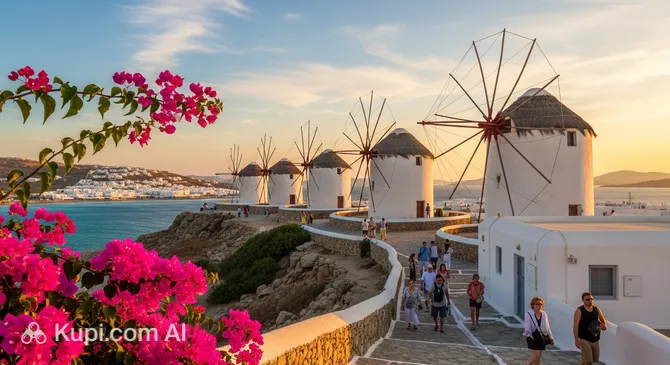
Mykonos. Illustration.
Source: Kupi.com AI

Travelers are particularly drawn to the island's iconic landmarks, such as the Kato Mili windmills which stand sentinel on a hill overlooking the town. Another highlight is the picturesque district of Little Venice, where colorful buildings are constructed right on the water's edge, offering breathtaking sunset views. The main town, Chora, is a mesmerizing labyrinth of narrow, stone-paved alleys, originally designed to confuse pirates but now serving as a delightful maze for pedestrians.

Whether you are looking to relax on golden sandy beaches, enjoy world-class dining, or simply wander through scenic streets, Mykonos provides an unforgettable setting for your next vacation. It is a place where every corner offers a postcard-perfect view, inviting you to discover its many secrets.

Weather Overview

Mykonos enjoys a typical Mediterranean climate, which means visitors can generally look forward to long, sunny summers and mild winters. The island is famous for its bright skies and moderate humidity, creating an inviting environment for beachgoers and explorers alike.

For those planning a trip, the weather in Mykonos is largely defined by the seasonal "Meltemi" winds, which provide a refreshing breeze during the hottest months of July and August. Generally, you can expect hot, dry summers perfect for swimming, and milder winters with occasional rainfall.

Average monthly temperature

Average monthly precipitation

Interesting Facts

Beyond its reputation as a glamorous party destination, Mykonos holds fascinating secrets and traditions that add depth to its character. Here are a few unique details that reveal the island's authentic soul and rich heritage.

  • The Color Code of Doors: While the island is famous for its uniform white architecture, the colors of doors and windows once held specific social meanings. Traditionally, sailors painted their doors blue, farmers painted them green, and everyone else used red. Although blue is dominant today, you can still spot these historical variations if you look closely.

  • A Church for Every Day: Despite its relatively small size, Mykonos is home to an astonishing number of churches and chapels. Local tradition claims there are enough religious sites to visit a different one for every day of the year, many of which were built as votive offerings by sailors grateful to have survived powerful storms at sea.

  • The Vampire Legend: In the early 18th century, the island was the site of a bizarre historical event documented by French botanist Joseph Pitton de Tournefort. He recorded a mass hysteria regarding a "vampire" or vrykolakas that allegedly tormented the locals, leading to a dramatic community effort to exorcise the spirit.

  • Petros the Pelican: The island has a living mascot known as Petros. The original pelican was rescued by a fisherman in the 1950s and became a beloved local celebrity. After his passing, he was succeeded by new pelicans, and today, spotting one of these majestic birds wandering the waterfront is considered a sign of good luck.

How to Get There

Reaching Mykonos is convenient due to its status as a premier travel destination in the Aegean. The island is served by its own international airport, which receives frequent flights from Athens throughout the year and direct connections from many European cities during the peak tourist season.

Travelers can also arrive by sea, with regular ferry services operating from the mainland ports of Piraeus and Rafina, as well as from neighboring islands. High-speed vessels and conventional ferries offer a variety of travel times to suit different schedules. For more detailed information on planning your journey, you can read more about how to get to Mykonos.

As an island destination, Mykonos does not have a railway network. Once you arrive, getting around is typically done by local bus, taxi, or rental vehicle, allowing you to easily explore the beaches and villages.

Main Attractions

One of the most photographed monuments on the island is the Church of Panagia Paraportiani. Located in the Kastro neighborhood of Chora, this unique architectural marvel is not just a single building but a complex of five churches joined together over centuries. Its asymmetrical, whitewashed walls create a stunning contrast against the deep blue sky and sea, making it a masterpiece of Cycladic aesthetics that fascinates architecture enthusiasts and photographers alike.

Just a short boat ride away lies the sacred island of Delos, a UNESCO World Heritage site that is essential for any history lover visiting the region. Mythologically known as the birthplace of Apollo and Artemis, this archaeological park is an open-air museum filled with ancient ruins, including the Terrace of the Lions and well-preserved mosaics. Walking through its ancient streets offers a profound glimpse into the spiritual and commercial life of antiquity.

For breathtaking panoramic views, a visit to the Armenistis Lighthouse is highly recommended. Perched on the northwestern tip of the island, this octagonal tower was built in 1891 and stands as a sentinel over the Aegean. It is a peaceful spot away from the bustling town center, offering visitors a chance to gaze out across the water toward the neighboring island of Tinos, especially captivating during sunset.

Travelers seeking the vibrant energy Mykonos is famous for should head to Paradise Beach. Renowned globally for its golden sands and crystalline waters, it transforms from a relaxing seaside retreat during the day into a lively party hub as the sun goes down. It is the perfect location to experience the island's legendary beach club culture, enjoy music, and swim in the refreshing sea.

Local Cuisine

Mykonos offers a culinary journey that goes far beyond the typical tourist fare, rooting itself deeply in the rich flavors of the Cyclades. The local cuisine is characterized by its simplicity and the high quality of its ingredients, ranging from sun-ripened vegetables to fresh catch from the Aegean Sea. Food here is not just sustenance; it is a way of life, celebrated in bustling tavernas and quiet seaside patios alike.

One of the island's most famous gastronomic treasures is Kopanisti, a spicy, creamy cheese with a distinct peppery flavor that has been granted Protected Designation of Origin status. It is often served as a spread on rusks or fresh bread and makes for a perfect appetizer. Another delicacy meat-lovers must try is Louza, often described as the "prosciutto of Mykonos." This thin, cured pork fillet is seasoned with savory spices and is a staple of the local charcuterie, offering a savory taste of the island's agricultural heritage.

For those with a sweet tooth, the local confectionery culture is delightful. You simply cannot leave without trying Amygdalota, traditional almond sweets that are baked to perfection and dusted with powdered sugar. These treats are crispy on the outside and chewy on the inside, often flavored with rose water. They are a symbol of hospitality and are widely available in local bakeries throughout the town's winding streets.

When it comes to beverages, the island offers refreshing options for every palate. A traditional non-alcoholic favorite is Soumada, a sweet, white syrup made from almonds, typically mixed with ice water to create a refreshing drink. For something stronger, a glass of Ouzo or local wine is the perfect accompaniment to a sunset dinner. The island's vineyards have a long history, producing excellent white wines that pair beautifully with seafood.

Dining in Mykonos is an experience of contrasts, catering to all styles of travel. You can enjoy a casual meal of Souvlaki or Gyros at a street-side stand in Chora, or sit down for a long, lazy lunch at a traditional family-run taverna in the inland village of Ano Mera, known for its authentic meat dishes. For a more romantic setting, the waterfront restaurants in Little Venice provide a spectacular backdrop, allowing you to dine while the waves gently crash just a few feet away.

Travel Tips

Welcome to the "Island of the Winds"! To ensure your adventure through the labyrinthine alleys of Chora and the golden beaches of this gem in Greece is as smooth as the Aegean breeze, here are some essential practical tips to help you navigate this cosmopolitan destination with ease.

  1. Dress for the Wind and Stone. Even in the height of summer, the famous "Meltemi" winds can make evenings surprisingly cool, so always pack a light jacket or shawl. Furthermore, the charming streets are paved with stone and can be uneven; leave the high heels at home and opt for comfortable flat sandals or sneakers to walk safely.
  2. Navigating the Island. Taxis are notoriously scarce on Mykonos, with only a limited number serving the entire island. It is often better to rely on the efficient KTEL bus network, which connects the main town to most popular beaches. If you choose to rent a scooter or ATV, drive with extreme caution, as the roads are narrow and winding.
  3. Managing Your Finances. The local currency is the Euro (€). While Mykonos is very modern and cards are widely accepted in restaurants and boutiques, you should carry cash for bus fares, small kiosks, and tipping. Be aware that this is one of the more expensive destinations in the region, so plan your daily budget accordingly.
  4. Health and Safety. The island is generally very safe, but standard precautions regarding personal belongings apply in crowded bars. Pharmacies are marked with a green cross and are well-stocked. A crucial health tip is to respect the sun; the cooling wind can mask the heat, leading to severe sunburns if you forget to reapply sunscreen.
  5. Language and Connectivity. Greek is the official language, but English is spoken almost everywhere, from high-end hotels to small tavernas. Free Wi-Fi is available in most cafes and beach clubs. Learning a few words like Kalimera (Good morning) and Efharisto (Thank you) is a great way to show respect and connect with locals.
  6. Respect Local Etiquette. While the beach clubs are known for their party atmosphere, the town center and villages have a more traditional rhythm. It is polite to cover up over your swimwear when walking through Chora or entering shops. Also, respect the afternoon quiet time, or "siesta," which typically lasts from 3:00 PM to 5:30 PM.
  7. What to Avoid. Do not drink the tap water, as it is often brackish and not suitable for consumption; bottled water is cheap and readily available everywhere. Additionally, avoid climbing on the iconic windmills or the roofs of churches for photos—this is considered disrespectful and can damage these historic structures.
  8. Embrace the Maze. The winding streets of Chora were originally designed to confuse pirates, so don't be frustrated if you lose your bearings. Getting lost is part of the Mykonos experience and often leads you to the best hidden boutiques and quiet squares. Shops here stay open very late, often past midnight, allowing for delightful night strolls.

With these practical insights, you are fully prepared to experience the magic of Mykonos beyond the postcards. Enjoy the vibrant energy, the stunning sunsets, and the warm hospitality that makes this island a truly unforgettable place to visit.

Entertainment & Nightlife

Entertainment in Mykonos is legendary, often cited as the main reason travelers flock to this cosmopolitan island in Greece. The destination undergoes a magical transformation as the sun sets, shifting from a laid-back beach retreat to a pulsating hub of music and dance. The nightlife here is world-famous, catering to a diverse crowd ranging from jet-setters seeking exclusivity to backpackers looking for unforgettable fun.

The heart of the evening action is undoubtedly the main town, Chora. Here, the narrow, winding streets are lined with countless stylish bars and chic lounges. A quintessential experience is enjoying a sunset cocktail in Little Venice, where the waves crash against the foundations of the colorful buildings, providing a dramatic and romantic backdrop. As the night progresses, the energy often moves to the famous beach clubs on the southern coast, such as those at Paradise and Super Paradise beaches, where international DJs spin tracks well into the morning hours.

For those who prefer retail therapy over dancing, the island offers an exceptional shopping scene. The famous Matoyianni Street is the commercial artery of the town, packed with high-end designer boutiques, handmade jewelry stores, and sophisticated art galleries. Uniquely, shops in Chora stay open until very late at night, allowing visitors to browse for souvenirs, fashion, and local art after dinner in the cool night air.

Beyond the parties and luxury, the island hosts a variety of cultural events. The Mykonos Summer Festival brings a touch of tradition and art to the forefront, featuring open-air concerts, theatrical performances, and art exhibitions often held in the town's municipal garden. For a truly authentic experience, look out for a Panigiri, a traditional religious feast organized by locals to honor a saint. These events feature local food, wine, and traditional folk dancing, offering a warm, community-centered alternative to the glitzy clubs.

Active travelers will find plenty of entertainment on the water. True to its nickname, the "Island of the Winds," Mykonos is a premier destination for windsurfing and kitesurfing. Beaches like Kalafatis and Ftelia are top spots for catching the breeze and riding the waves. Additionally, the crystalline waters of the Aegean are perfect for scuba diving, with several centers offering excursions to explore underwater caverns, reefs, and shipwrecks teeming with marine life.

Parks & Museums

While Mykonos is predominantly known for its sun-bleached coastline and vibrant nightlife, the island also possesses a quieter, more culturally rich side waiting to be explored. Beyond the golden sands, visitors can discover a selection of charming green spaces and fascinating museums that preserve the island's maritime heritage, agricultural roots, and ancient history.

Due to the island's dry, Cycladic climate, lush parks are a rarity, making the Meletopoulou Public Garden in Chora a true hidden gem. Located near the harbor, this small but enchanting oasis offers a peaceful retreat from the bustling alleys, shaded by palm trees and fragrant oleanders. It is a favorite spot for a quiet stroll or a moment of reflection. For those seeking a more rugged natural experience, the area around the Marathi Lake is an unexpected find. This artificial reservoir serves as a wetland habitat for various bird species and offers a completely different, serene landscape compared to the coastal resorts, perfect for nature lovers and hikers.

For culture enthusiasts, the Archaeological Museum of Mykonos is an essential stop. Built in 1902, it houses an impressive collection of pottery and jewelry dating back to the 25th century B.C., largely excavated from the nearby sacred island of Delos and the "Pit of Purification" on Rheneia. Its most famous exhibit is the large relief pithos (storage jar) depicting the Trojan Horse, a masterpiece of ancient craftsmanship that offers insight into the region's pivotal role in antiquity.

Another highlight is the Aegean Maritime Museum, located in a traditional 19th-century building in the town center. This museum is dedicated to the preservation of Greek nautical history and tradition. Visitors can admire intricate models of ships ranging from the pre-Minoan period to the early 20th century, as well as rare maps, navigational instruments, and coins. In the museum's garden, you can even see the restored mechanism of the Armenistis Lighthouse, connecting you directly to the island's seafaring past.

To understand the daily life of locals in centuries past, a visit to the Agricultural Museum is highly recommended. The centerpiece of this open-air site is Boni's Windmill, which stands proudly on a hill overlooking the town. The museum features a traditional threshing floor, a wine press, and a collection of farming tools, providing a vivid picture of the island's pre-tourism rural economy. The location also offers one of the best panoramic views of Chora and the harbor, especially at sunset.

For an authentic insider experience, seek out Lena's House, a branch of the Folklore Museum located near the Tria Pigadia area. This preserved 19th-century middle-class residence is furnished with original antique furniture, embroideries, and decorative plates, making you feel as though the owners have just stepped out. It offers an intimate and nostalgic glimpse into the domestic life of the Mykonian aristocracy of a bygone era.

Getting Around

Public transport in Mykonos is relatively simple and relies primarily on a bus network, as there are no trains, metros, or trams on the island. The local bus service, known as KTEL, is the most efficient and affordable way to get around. It connects the main town, Chora, with the most popular beaches, the village of Ano Mera, and the airport. Tourists should be aware that there are two main bus stations in Chora: Fabrika (serving the southern beaches like Platis Gialos and Paradise) and the Old Port (serving the northern and eastern routes). It is essential to check which station your bus departs from to avoid confusion.

For those wishing to travel by bus, the payment system is straightforward. Tickets cannot be used electronically via apps; you must purchase physical tickets. These can be bought at the central bus stations, from authorized kiosks, or sometimes directly from the driver, though carrying small change is highly recommended if paying on board. Ticket prices are quite reasonable, typically ranging from €1.80 to €3.00 depending on the distance and the time of day. Night buses, which run frequently during the peak summer season to transport partygoers, may have slightly higher fares.

A unique and scenic feature of the local transport system is the "SeaBus" and the traditional water taxis. The Mykonos SeaBus provides a quick and pleasant connection between the New Port (Tourlos) and the Old Port in Chora, saving travelers from the heavy road traffic. Additionally, small boats known as "caïques" operate from beaches like Platis Gialos and Ornos, shuttling visitors along the coast to other famous spots like Super Paradise and Elia. Tickets for these services are usually purchased separately at the departure points.

Taxis are an alternative, but they come with a significant warning: there is a very limited number of taxis serving the entire island. During July and August, waiting times can be extremely long. While some ride-hailing apps operate on the island, they typically connect you to licensed taxi drivers or private transfer services, often at a premium price. If you plan to use a taxi, it is advisable to book well in advance or look for the designated taxi ranks in the main town, though queues can be lengthy.

Given the scarcity of taxis and the fixed routes of buses, many visitors opt for renting vehicles to have more freedom. Renting a scooter, ATV (quad bike), or small car is a very popular choice. However, keep in mind that parking in Chora is strictly prohibited within the town itself, as the center is a pedestrian-only zone. You will need to park in designated areas on the outskirts and walk into the town. Walking is, in fact, the only way to navigate the labyrinthine streets of the main town, where no vehicles are allowed.

Accommodation

Accommodation in Mykonos is as diverse as its visitors, ranging from extravagant five-star resorts and exclusive private villas to traditional whitewashed guesthouses and convenient hostels. The island is renowned for its high-end hospitality, often featuring properties with infinity pools and stylish Cycladic design, but there are also options for travelers watching their budget, particularly if they are willing to stay slightly further from the immediate coastline.

Choosing where to stay depends largely on the type of holiday you desire. The main town, Chora, is the perfect base for those who want to be in the heart of the action, offering immediate access to the famous nightlife, shopping boutiques, and the central bus station. For beach lovers who prefer waking up by the sea, the southern coast offers popular resort areas like Ornos and Platis Gialos, which provide excellent amenities and easy connections to other beaches via water taxis. Travelers seeking a quieter, more authentic experience might prefer the inland village of Ano Mera, while party enthusiasts often gravitate towards accommodation near the famous beach clubs.

A crucial piece of advice for any trip to Mykonos is to book your accommodation well in advance. During the peak summer months of July and August, the island often reaches full capacity, and the most desirable properties can be reserved up to a year ahead. Early booking not only secures your preferred location but can also help you avoid the steep price hikes common in the last-minute market.

Price ranges vary significantly by season and location. Mykonos is generally considered a premium destination, so expect prices for mid-range and luxury hotels to be higher than on many other Greek islands. While budget travelers can find affordable studios or camping options, these sell out quickly. Booking is typically done through major online travel platforms, though contacting smaller family-run owners directly can sometimes yield a more personalized stay.

Nearby Cities

For those looking to explore the surroundings, Mykonos serves as an excellent base for day trips to several interesting nearby locations:

Located just a short ferry ride to the north, Tinos is often renowned as the spiritual heart of Greece. While it is famous for the Church of Panagia Evangelistria, a major pilgrimage site, the island also boasts a stunning landscape dotted with ornate traditional dovecotes and over 40 picturesque villages like Pyrgos. It offers a more authentic, relaxed atmosphere compared to its cosmopolitan neighbor, making it perfect for those seeking to experience local traditions and exquisite marble craftsmanship.

Another fascinating option is Syros, the administrative capital of the Cyclades. Its main town, Ermoupoli, is celebrated for its magnificent neoclassical architecture, which includes the impressive Town Hall and the historic Apollo Theater. Unlike the typical whitewashed Cycladic settlements, Syros exudes a grand, almost urban elegance, offering a unique blend of history, culture, and vibrant local life that is distinct from the other islands in the archipelago.

In general, the region around Mykonos offers a variety of attractions, and travelers are encouraged to check local resources for day trip options according to their interests.

Shopping & Souvenirs

Shopping in Mykonos is a world-class experience that seamlessly blends high-end luxury with traditional island charm. The city is renowned for its cosmopolitan retail scene, where whitewashed alleys host everything from exclusive international designer brands to unique local boutiques. It is particularly famous for its exquisite jewelry, handmade leather goods, and sophisticated art galleries, making it a paradise for fashion enthusiasts and collectors alike.

The beating heart of the island's commercial life is Matoyianni Street. This iconic, narrow lane in the center of Chora is lined with designer stores, souvenir shops, and chic clothing boutiques. Wandering through this area and its connecting alleyways offers a delightful treasure hunt where you can find the latest fashion trends alongside traditional Greek craftsmanship. Another key area is the district of Little Venice, where you can browse for art and jewelry while enjoying the sea breeze.

Unlike major metropolitan cities, Mykonos does not feature large, American-style indoor shopping malls. Instead, the entire town of Chora functions as an open-air shopping center. The experience is characterized by entering small, intimate stores housed in traditional Cycladic buildings rather than navigating massive commercial complexes. There are some smaller commercial clusters near the airport and in Ano Mera, but the main attraction remains the pedestrianized town center.

While the island is not known for sprawling flea markets, the Old Port area offers a glimpse into traditional commerce. Here, you can often find local fishermen selling their fresh catch early in the morning, alongside vendors offering fresh vegetables and fruits. It is a small but authentic slice of daily life that contrasts with the glamour of the fashion boutiques. Occasionally, pop-up bazaars featuring local artisans may appear during the summer festivals.

When it comes to souvenirs, Mykonos offers items of exceptional quality. Handmade leather sandals are a staple purchase, renowned for their durability and style. The island is also famous for its jewelry, particularly designs featuring the "mati" (evil eye) which is believed to offer protection. For a taste of the island to take home, look for amygdalota (traditional almond sweets) or a jar of local honey.

One of the most unique aspects of shopping here is the opening hours. During the high season, shops in the main town often stay open until midnight or even 1:00 AM, catering to the late-night lifestyle of visitors. Payment methods are very modern, with credit and debit cards being widely accepted even in smaller kiosks. However, carrying some cash is always useful for small purchases.

For visitors from outside the European Union, tax-free shopping is widely available. Many high-end boutiques and jewelry stores participate in the VAT refund scheme. Look for the "Tax Free" signage in shop windows and ask for the necessary forms at the checkout to claim your refund upon departure from Greece.

Reached the end of the page?

That means the route is fully explored