Support

New Venetian Fortress

About

Towering over the old port on St. Mark's Hill, the New Fortress is one of the most impressive fortifications Greece is famous for. A monumental testament to Venetian rule built in the late 16th century, it is striking for its power and sophisticated Renaissance architecture.
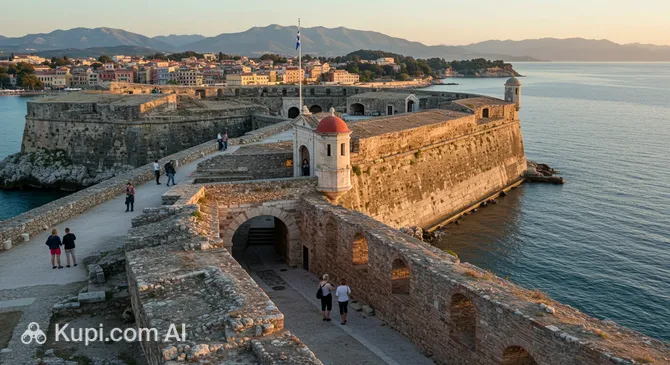
New Fortress. Illustration.
Source: Kupi.com AI

Traveler photos:

Unlike its "older sister" located to the east, this fortress in Corfu Town was created as a single, complex defensive system. It is divided into two levels: the lower level was designed for the reliable protection of the harbor, while the upper level ensured the safety of the settlement itself. Today, it is an iconic historical site attracting fans of military history and panoramic views.

The surviving decorative elements are of particular value — stone Lions of Saint Mark that still gaze over the city from the heights of the bastions. Walking along the deep dry moats and massive stonework, visitors can physically feel the scale of effort spent on turning the island into an impregnable maritime citadel.

Contacts

For up-to-date information before your visit or to arrange group tours, you can use the official contact details. The site is primarily managed by the Ministry of Culture.

How to contactContact
AddressEl. Venizelou 13, Kerkira 491 00, Greece
Phone+30 2661 048120
Websiteodysseus.culture.gr

What to Do

The highlight of your visit to the fortress will be climbing to its upper platforms. From here, you'll find arguably the best panoramic views of the tiled roofs of Corfu Town, the endless blue of the Ionian Sea, and the silhouette of the neighboring Albanian coast. It is the perfect spot for those seeking inspiration and wanting to take stunning panoramic photos.

Architecture enthusiasts will find it fascinating to explore the fort's internal layout. You can walk through the intricate maze of underground galleries and inspect the historical casemates that once served as shelters for soldiers and ammunition depots. The two-tier structure of the bastions clearly demonstrates the genius of the Venetian engineers, who knew how to use the complex terrain of the hill for defensive purposes.

The fortress grounds invite slow-paced exploration: you can find many quiet corners here where it's easy to imagine the atmosphere of a medieval garrison. Be sure to look for the Venetian heraldic symbols on the walls and the massive gates that still hold the spirit of past battles and great victories.

Getting There

Reaching this majestic fort is easy, as it is located in the heart of Corfu Town at El. Venizelou 13. The Old Port serves as an excellent landmark, with picturesque city streets leading from there to the fortress walls.

If you prefer public transport, use the local buses — the Taxi Astika Leoforia Amaxes stop is in the immediate vicinity of the entrance. For those who value comfort, taxis are always available to take you from anywhere in the city or the airport directly to the foot of St. Mark's Hill.

Many tourists prefer to arrive on foot as part of a long walk through the historic center, as the journey from the famous Old Fortress takes very little time, allowing you to cover both of the island's main defensive hubs in a single day.

Nearest city: Corfu

History & Facts

Construction of the fortification now known as the New Fortress (or Neo Frourio) began in the 1570s at the initiative of the Venetian Republic. The project was led by the talented Italian architect F. Vitelli. To make room for the massive bastions and moats, authorities had to take radical measures: about two thousand houses and several churches were demolished in the city.

The fort's primary objective was to protect the city and port from the constant threat of the Ottoman Empire. For centuries, the fortress was considered one of the finest examples of Renaissance military engineering. Interestingly, despite its name, it is only a few decades younger than the main fortifications of the Old Fortress, though it significantly surpasses it in the complexity of its internal galleries.

In the 19th century, during the British protectorate, the fortifications were modernized by the British, who added additional defensive elements while carefully preserving the Venetian character. Original bas-reliefs depicting the winged Lion of Saint Mark — the symbol of Venetian power — have survived on the stone walls of the bastions to this day.

Time Needed

To leisurely explore all levels of the fortifications and peek into the fort's hidden corners, experienced travelers recommend setting aside about 1.5–2 hours. This is plenty of time to climb to the highest point and take commemorative photos.

If you plan to study the internal passages and casemates in detail or simply want to enjoy the sea breeze from the top of the bastion for a while longer, it's worth adding a bit more time to your schedule. A visit to the fortress pairs perfectly with a stroll through the old town, creating a rich cultural itinerary for half a day.

Working Hours

When planning your visit, keep in mind that the fortress operates on a fixed schedule. It is open to visitors from 08:30 to 15:30 daily, except Tuesdays.

Please note that Tuesday is the weekly holiday, when access to the site is closed. It is recommended to arrive at opening time or a couple of hours before closing to ensure you have enough time to explore all the bastions before the end of working hours.

DayWorking hours
Monday8:30 – 15:30
TuesdayClosed
Wednesday8:30 – 15:30
Thursday8:30 – 15:30
Friday8:30 – 15:30
Saturday8:30 – 15:30
Sunday8:30 – 15:30

Nearby

Exploring the surroundings of the fort will allow you to delve deeper into the island's atmosphere and see how different historical eras are closely intertwined here. The proximity of the port, ancient squares, and museums makes this part of the city ideal for walking tours.

NameDistance
Patounis' Soap Factory0.2 km
Old Buoy0.3 km
Bell Tower of the Annunziata Church0.4 km
Black Rose Pirate Ship0.4 km
Arthaus Cafe Wine Bar0.5 km
Byzantine Museum of Antivouniotissa0.5 km
Casa Parlante Museum0.5 km

Reached the end of the page?

That means the route is fully explored