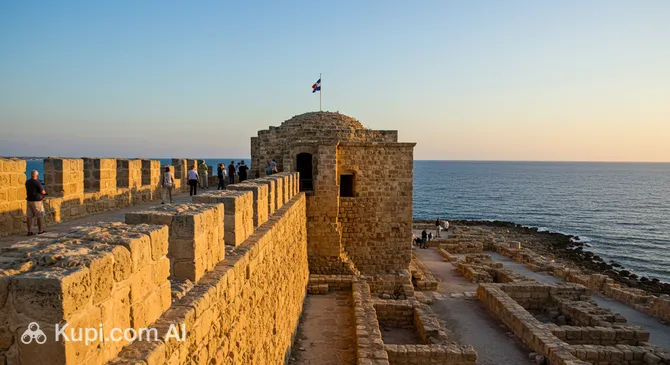
Standing at the western edge of the picturesque harbor in Paphos is a monumental structure that has become one of the most recognizable symbols representing Cyprus in travel guides. Paphos Castle is an outstanding monument of medieval architecture, its history inextricably linked with the defense of the island and its maritime borders.
Paphos Castle. Illustration.
Source: Kupi.com AI
Traveller photos:
This compact and imposing building made of dressed limestone was erected in the early 13th century. It was built on the site of the Byzantine fort "Saranta Kolones" (Forty Columns), which was destroyed by a powerful earthquake in 1222. Today, the castle appears to tourists in its Ottoman architectural form, preserving the spirit of past eras.
Over the centuries of its existence, the fortress has played many roles: from an impregnable defensive hub to a prison and even a salt store during British rule. Today, it is a popular cultural site, attracting travelers with its rugged beauty and historical significance.
Contacts
When planning a visit to this historic location, it is a good idea to check the contact information in advance to reach the administration or clarify visit details. Below are the current details to help you easily find the site in the city's harbor area.
Exploring the interior of the fortress allows you to feel the atmosphere of a medieval fort. Visitors can walk through the stone halls and climb the narrow stairs to the castle roof. It is from here that the most impressive panoramic views of Paphos harbor and the endless Mediterranean Sea open up, making it an ideal spot for memorable photos.
Temporary art and history exhibitions are often held inside the historic building. During the summer season, the square in front of the castle transforms into a stage for large-scale cultural events: theatrical performances, opera festivals, and open-air classical music concerts that draw audiences from all over the world.
Getting There
Finding this historic site is easy, as it is located in the heart of the Kato Paphos tourist area, right on the waterfront. Thanks to this prime location, guests at most coastal hotels can reach the fortress during a pleasant walk along the sea.
For those staying in more distant parts of the city, public transport is a convenient option. City buses run regularly to the harbor terminus, from where the castle entrance is just a couple of minutes' walk. If you prefer to travel by rental car or taxi, parking is available near the port area, making the trip quick and convenient.
Nearest city: Paphos
History & Facts
The history of this site began in the early 13th century when a new fortress was founded by the influential Lusignan dynasty. In the 14th century, the fortification faced a serious test of strength, withstanding a long siege by the Genoese during the war of 1373, though it later came under their control. In 1391, King James I de Lusignan ordered the restoration of the destroyed walls, returning the castle to its defensive status.
The Venetians, who ruled the island at the end of the 15th century, further strengthened the fortification, but in the face of the imminent Ottoman invasion in 1570, they destroyed the castle themselves so it would not serve as a base for the invaders. Later, Ottoman authorities rebuilt the structure, giving it the appearance we see today. Over the years, the castle has served not only as a fortress but also as a grim prison and later a utilitarian salt store.
Time Needed
To leisurely explore all levels of the fortification, peek into its inner halls, and fully enjoy the sea views from the upper platform, most travelers need about 1–1.5 hours. This is plenty of time for a relaxed stroll and a photo session.
If your visit coincides with one of the cultural exhibitions or festivals, it is worth setting aside a bit more time. The castle is conveniently located in the tourist center, so a visit can easily be combined with a walk along the promenade or lunch at one of the seaside restaurants.
Working Hours
The doors of this historic landmark are open to guests daily. According to the official schedule, visitors are welcome from 8:30 AM to 7:30 PM, Monday through Sunday. This consistent schedule allows you to plan your visit either in the morning hours, when it is not yet too hot, or closer to the evening to catch the sunset over the sea horizon.
Despite the clearly established hours, it is important to keep in mind that the schedule may vary slightly depending on the tourist season. It is recommended to check the current opening hours before your trip to ensure your visit is as comfortable as possible.
8:30 – 19:30
Nearby
The area around the harbor is literally steeped in history, and exploring the surroundings of the fort will allow you to get a full picture of the city's rich past. Unique archaeological sites recognized as UNESCO World Heritage are concentrated here within a short distance of each other.