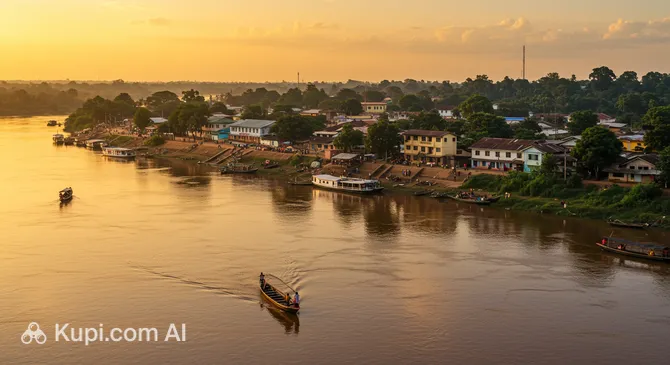
Mbandaka is a fascinating city located in the heart of Africa, on the eastern bank of the majestic Congo River. Serving as the administrative center of the Equateur Province in DR Congo, it possesses a unique atmosphere where the wild nature of the tropics meets the legacy of the colonial era. The city's population exceeds one million people, making it a lively and dynamic cultural hub for the region.
Mbandaka. Illustration.
Source: Kupi.com AI
The city has a rich history that began in 1883 when the famous explorer Henry Morton Stanley founded a settlement here called Equateurville. Its location is unique: Mbandaka is situated just 4 kilometers north of the equator. The city's layout still bears the hallmarks of its colonial past, harmoniously blending with vibrant African character and multilingualism, as Lingala, Mongo, and French can be heard on the streets.
Tourists are drawn here by the opportunity to immerse themselves in the authentic atmosphere of the Congo Basin. The city's main features are its proximity to endless tropical forests and its role as an important river port. Visiting Mbandaka is an invitation to explore one of the most exotic corners of the planet, where life flows to the rhythm of the great river.
Weather Overview
The climate in Mbandaka is typical for regions located on the equator: an eternal summer with high humidity prevails here. The average air temperature throughout the year fluctuates between 25–30°C. At night, the thermometer rarely drops below 23°C, while during the day it often reaches 32–34°C, which, combined with the tropical rainforests, creates a "steam bath" effect.
Precipitation in the city is abundant and distributed throughout the year; however, one can distinguish wetter and drier periods. The rainy season lasts from October to May, peaking in October and November when up to 200 mm of rain can fall in a single month. It is worth studying more detailed information about Mbandaka's climate before planning water excursions.
The most favorable time to visit the city is considered the period from June to September. During these months, rain occurs less frequently, and the humidity becomes slightly less intense, making jungle walks and boat trips easier. Nevertheless, brief tropical downpours are possible at any time of year, so a light raincoat should always be at hand.
Average monthly temperature
Average monthly precipitation
Interesting Facts
The city was designed by Henry Morton Stanley with plans for 100,000 residents and ambitions to become the capital of the Congo Free State, although this plan was never fully realized.
In 1947, the construction of a 39-meter-high town hall was completed here, which at the time was the tallest building in the entire Belgian Congo.
Mbandaka is one of the few cities in the world located in the immediate vicinity of the equator, making its climate and day length virtually unchanged throughout the year.
The city is a vital river hub, connecting Kinshasa with remote regions of the country that are often impossible to reach by land.
The name "Equateurville," which the city bore until 1966, directly pointed to its geographical uniqueness.
How to Get There
Transport accessibility to Mbandaka is shaped by its unique geographical position. The primary and fastest way to reach the city is by air. The local airport regularly handles flights from the country's capital, providing a reliable connection to the outside world for tourists and business travelers. You can find more travel details on the page regarding ways to reach the city.
The region's main aviation hub is Mbandaka Airport (IATA: MDK). It is located very close to the urban areas, which significantly simplifies transfers to your accommodation. The airport primarily serves domestic routes, linking the city with Kinshasa and other major centers.
The second most popular but most scenic route is traveling along the Congo River. The city is connected by waterways to Kinshasa (a distance of about 1,000 km) and Boende. River vessels and ferries transport both cargo and passengers, offering a unique experience of immersion into Africa's tropical landscapes. There is currently no railway service in this region.
Main Attractions
The primary natural treasure of the city is undoubtedly the Congo River. Its majestic waters serve not only as a major transport artery but also offer travelers unforgettable views, especially at sunset. A boat trip on the river is the best way to experience the scale of this ecosystem and observe the daily life of local fishermen.
For eco-tourism enthusiasts, a visit to Luena Falls is a must. Set in picturesque surroundings, it offers excellent opportunities for outdoor walks and wildlife observation. The tropical rainforests surrounding Mbandaka—the second largest in the world—hide an incredible diversity of flora and fauna that will amaze any explorer.
Within the city itself, the colonial architecture is worth noting. Walking along the Ruki River embankment or viewing the old administrative buildings allows you to feel the historical significance of the city. These sites have preserved the spirit of the past and provide an excellent backdrop for learning about the region's cultural heritage.
Local Cuisine
A gastronomic journey to Mbandaka is an introduction to the bold flavors of equatorial Africa. The local diet is based on fresh products caught in the Congo River or grown in the region's fertile soil. One of the main dishes you must try is mbundu—freshly caught fish prepared with aromatic palm oil and local spices.
A traditional accompaniment to any meal is fufu—a thick and nutritious cassava porridge that serves as the local alternative to bread. It is usually served with rich sauces, meat, or vegetables. Street food in the city's markets includes fried plantains and various cassava snacks prepared right in front of you over an open fire.
Regarding drinks, Mbandaka offers an abundance of freshly squeezed juices made from mango, papaya, and pineapple. For those who want to try something truly local, look for palm wine. This traditional fermented drink has a unique taste and is an important part of the local social culture. The best places for lunch are the small restaurants on the embankment, where your meal is accompanied by views of the great river's slow current.
Travel Tips
Mbandaka is a city for true adventure seekers, and a little preparation will help you make your trip as comfortable and safe as possible.
Clothing and Essentials: Choose lightweight clothing made from natural fabrics, as the city is always hot and humid. Be sure to bring insect repellent, sunscreen, and comfortable closed-toe shoes for jungle walks.
Transport: Use taxi-motos for quick trips, but always discuss the price beforehand. For river excursions, it is better to hire a boat through trusted guides or your hotel management.
Finances: Carry a sufficient supply of cash (local francs and small denomination US dollars). International bank cards are rarely accepted, and ATMs are scarce in the city.
Health and Safety: Drink only bottled water. It is recommended to consult a doctor in advance regarding malaria prophylaxis and to carry a basic first-aid kit. Avoid walking in unfamiliar neighborhoods after dark.
Communication: The main languages of communication are Lingala and French. English is not widely spoken, so learning a few basic phrases (for example, the greeting "Mbote" in Lingala) will be very helpful when interacting with locals.
Local Etiquette: Be polite and always ask for permission before taking photos of people or their homes. Modesty in dress is appreciated and helps earn respect from those around you.
What to Avoid: You should not photograph government buildings, bridges, or military posts—this can cause problems with local authorities.
Additional Tip: The best time to visit is the dry season from June to September, when traveling around the region becomes significantly easier.
May your introduction to equatorial Africa be filled only with positive emotions and amazing discoveries!
Entertainment & Nightlife
Entertainment in Mbandaka is closely tied to its natural surroundings and traditional way of life. Most of the daytime for tourists is dedicated to active recreation: fishing on the Congo River, exotic birdwatching, or short expeditions into the jungle. It is an ideal place for those seeking a connection with nature and a break from the hustle and bustle of megacities.
Local holidays hold a special place in the city's life. If your visit coincides with the harvest festival held at the end of the rainy season, you will witness a vibrant spectacle. The streets fill with traditional music, energetic dances, and people in colorful costumes, allowing for a deeper understanding of local culture and traditions.
As for nightlife, it is quite quiet here and primarily concentrated in small venues along the embankment or within hotels. Evening strolls along the Congo River or a cozy dinner overlooking the water are the main ways to spend time after sunset. Since there are virtually no classic nightclubs in the city, safety and tranquility are the priorities here.
Parks & Museums
The role of the main "parks" in Mbandaka is fulfilled by the vast tropical forests surrounding the city. These are true living museums of nature with incredible biodiversity. Travelers can take excursions into the Congo and Ruki river basins to see rare plants and exotic animals in their natural habitat. Ecotourism is the primary way to enjoy outdoor recreation here.
For those who prefer more tranquil walks, the area around Luena Falls offers excellent spots for picnics and birdwatching. The sound of falling water and dense greenery create an atmosphere of peace that is hard to find within the city limits. This location is popular among both tourists and locals looking for coolness during the heat of the afternoon.
Despite the lack of traditional art galleries, the city itself is an open-air museum. The historical zone, where the town hall was once located, and the old colonial buildings vividly tell the story of the city's founding era and its administrative past. Walking through these areas replaces a visit to a history museum, allowing you to literally touch the walls that witnessed the emergence of modern Mbandaka.
Getting Around
The transportation system in Mbandaka relies heavily on individual transport and waterways. The most popular way to move around the city streets is by taxi-motos (motorcycle taxis). They are maneuverable, inexpensive, and allow you to reach any point in the city quickly. It is customary to agree on the fare with the driver in advance, as there are no fixed rates.
River transport plays a key role in city life. Numerous boats, pirogues, and ferries ply the Congo River, connecting the center with the outskirts and nearby settlements. For tourists, renting a boat is not just a means of transport but also an opportunity for an exciting water excursion, offering panoramic views of Mbandaka from the river.
In the central part of the city, many prefer to get around on foot, as the main administrative buildings, markets, and docks are located quite compactly. Public buses in the traditional sense are poorly developed here, so taxi-motos remain the primary choice. For longer trips out of town, you can arrange to rent a car with a driver, but the condition of local roads should be taken into account.
Accommodation
The choice of accommodation in Mbandaka is primarily geared toward travelers who value authenticity and basic comfort. Most available lodging options are small hotels and guesthouses located in the city center or along the Congo River embankment. Staying by the river is particularly popular due to the scenic views and the fresh breeze on hot days.
The price range in the city is fairly stable and falls within the budget and mid-range segments. It is difficult to find luxury international chains here; however, many family-run guesthouses offer a warm welcome and a homely atmosphere. When choosing a hotel, it is worth checking for the availability of mosquito nets and backup power systems, which are important for a comfortable night's sleep in an equatorial climate.
Since the region's tourism infrastructure is still developing, it is recommended to book accommodation in advance. Often, it is more convenient to do this through local travel agencies or by contacting guesthouses directly, as not all properties are listed on global booking systems. Staying in the city center will put you within walking distance of markets and the main transport docks.
Nearby Cities
Mbandaka serves as an excellent starting point for exploring the hard-to-reach but breathtaking surroundings of the Congo River Basin. River routes allow you to reach places where nature has been preserved in its original state and life flows much as it did centuries ago.
One interesting destination is Epena, located to the northwest. This trip allows you to see changing landscapes and get to know the daily life of riverside villages. It is also worth noting the towns of Impfondo and Kiri, which attract visitors with their remoteness and the unique atmosphere of the Congo Basin hinterland.
City
Population
Distance
Epena
—
171 km
Impfondo
40,654
177 km
Kiri
14,612
186 km
Basankusu
52,216
216 km
Inongo
45,159
218 km
Although distances in this region are measured not only in kilometers but also in travel time by water, every such trip turns into a full-fledged expedition. Exploring neighboring settlements will help you form a complete picture of life in the very heart of Africa.
Shopping & Souvenirs
Shopping in Mbandaka is primarily about visiting the lively local markets, which are the heart of city life. The main trading areas are concentrated near the banks of the Congo River, where fishermen and farmers bring their goods from all over the surrounding area. Here, you can not only buy food but also feel the true rhythm of life in equatorial Africa.
If you are looking for authentic souvenirs, pay attention to handmade crafts. Local artisans are famous for their ability to weave durable and beautiful baskets, as well as creating unique wooden sculptures and masks. Fabrics with traditional African prints also make excellent gifts, distinguished by their bright colors and high quality.
Shops in the city center offer a basic range of goods, but for true local flavor, one should head to the markets. It is important to remember that the trading culture here involves appropriate bargaining—it is not just a way to lower the price but also an important element of social interaction. Most transactions are made in cash using local currency, and typical market hours start early in the morning and last until sunset.