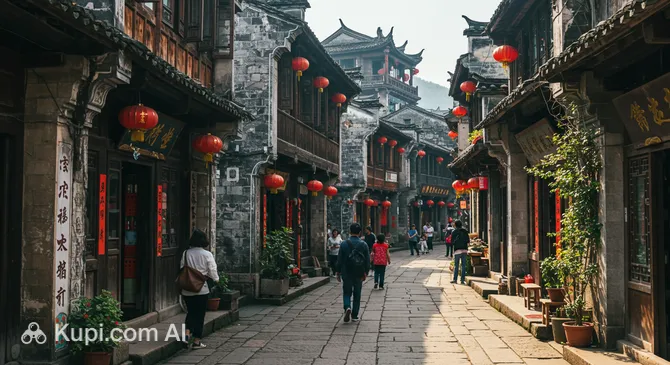
Located in the heart of Wuhua County, the town of Shuizhai is a prime example of a harmonious blend of ancient traditions and rapid modern development. This administrative center of Guangdong Province in China historically flourished at the intersection of waterways, which transformed it into a significant economic and trade hub for the region. Today, the town attracts travelers with its unique atmosphere and deep connection to the heritage of the Hakka people.
The town's geographical position in a subtropical zone ensures an abundance of greenery and a mild climate, while a population exceeding one million creates a dynamic rhythm of life. Shuizhai. Illustration.
Source: Kupi.com AI
The modern face of Shuizhai is shaped around new residential quarters and futuristic facilities; however, behind the facade of glass and concrete, one can still feel the spirit of the old merchant town where crafts flourished and education thrived.
An exploration of the town should begin with walks along its embankments and an introduction to Hakka architecture, which is evident in the details of local buildings and street layouts. You can dive into the rich past and learn about the settlement's founding by studying the history of Shuizhai, which is closely intertwined with the lives of prominent scholars and athletes who brought fame to this region. We invite you to discover this welcoming corner of southern China, where everyone will find something for themselves: from sporting excitement to peaceful nature contemplation.
Weather Overview
The town of Shuizhai is governed by a humid subtropical climate, typical of southern China. This means that travelers can expect long warm seasons and an abundance of sunny days. Summers in the region are quite hot and rainy, with peak rainfall in June and August, when air temperatures often rise above 30°C. Winter arrives gradually and remains mild: even in January, average figures stay around 12°C, making walks quite comfortable.
When planning your trip, keep in mind that the rainiest period falls in spring and early summer—from April to June, humidity increases significantly. If you want to enjoy dry and clear weather, the best time for a visit would be the autumn months and the beginning of winter, when a pleasant coolness sets in. Detailed weather in Shuizhai will help you more accurately choose your wardrobe and plan outdoor activities.
Overall, the town's climate is favorable for visiting throughout the year, though you should be prepared for sudden downpours during the summer period. The average annual rainfall ensures the surroundings always remain emerald-green and the air stays fresh. Frosts are extremely rare in winter, but a light jacket for evening strolls will still be needed, as night temperatures can drop to 7-8°C.
Average monthly temperature
Average monthly precipitation
Interesting Facts
Shuizhai is one of the key centers for the Hakka people. The unique dialect and architectural traditions of this sub-ethnic group are still carefully preserved here, setting the town apart from other regions in Guangdong Province.
In 1914, the county centered in the town was officially renamed Wuhua. This decision was made by the national government to avoid confusion with several other counties that bore the exact same name at the time.
The town is known as the "sports cradle" of the region. It is home to the ultra-modern Wuhua Olympic stadium, which has become a new symbol of the city and highlights the local residents' love for football and athletics.
Shuizhai is considered the birthplace of many outstanding figures. Famous Chinese scholars, military leaders, and martial arts masters have come from this county, and their names are often found in the titles of local educational and cultural institutions.
The town's economic landscape has changed dramatically over the last few decades thanks to its proximity to giants like Shenzhen and Guangzhou. From an agricultural center, Shuizhai has transformed into a modern industrial hub with high-rise buildings and a developed IT infrastructure.
How to Get There
The transport accessibility of Shuizhai has significantly improved in recent years thanks to infrastructure development in Guangdong Province. Despite being a county seat, reaching it from China's major metropolises is straightforward. The main flow of travelers arrives via neighboring large transport hubs, utilizing a developed network of expressways and railways.
For those who prefer air travel, the nearest major hubs are Guangzhou Baiyun and Shenzhen Bao'an international airports. From there, Shuizhai can be reached by comfortable intercity buses or taxis, with the journey taking several hours. If you are planning your trip in advance, it is worth checking information on travel options to Shuizhai to choose the most convenient connecting route.
Railway travel is another reliable method. Although Shuizhai itself may not have a high-speed train station, it is recommended to book a ticket to the city of Meizhou. Meizhou is connected by high-speed lines to the largest cities in southern China. Upon arrival at Meizhou station, you can transfer to a regular bus that will quickly take you to the center of Shuizhai.
The architectural face of Shuizhai is an intriguing mix of traditional heritage and bold urban solutions. The main landmark of the modern town is undoubtedly the Wuhua Olympic Sports Center. Opened in 2019, this futuristic stadium resembles a spacecraft that has landed among the hills of Guangdong. It serves not only as a venue for large-scale competitions but also as the main hub of social life, where residents and tourists gather for walks and participation in city events.
For those seeking more traditional flavor, Shuizhai offers an exploration of neighborhoods featuring Hakka-style architecture. Here, you can see characteristic residential complexes that were built for centuries to protect and accommodate large families living together. A stroll through the local streets allows you to feel the continuity of generations: ancient artisan workshops sit side-by-side with modern shopping arcades and cozy tea shops.
Special attention should be paid to the city embankments and pedestrian zones along the rivers. In recent years, the county administration has actively invested in creating well-maintained park areas that have become ideal spots for evening promenades. Here, the traditions of southern China meet the modern desire for comfort, creating unique outdoor spaces for relaxation where you can observe the lives of townspeople in a natural setting.
Local Cuisine
A gastronomic journey to Shuizhai is primarily an introduction to the original Hakka cuisine, which is famous for being hearty, simple, and emphasizing the natural taste of products. The local diet is based on dishes made from rice, pork, and fresh vegetables. A characteristic feature is the use of stewing and steaming techniques, which preserves the nutritional value of the ingredients. Be sure to try "Kejia niang doufu" (stuffed tofu)—this dish is considered a classic and the pride of the local table.
Among the beverages in Shuizhai, rice wine holds a special place, prepared here according to ancient recipes. It has a mild taste and is often served at festive tables. Tea lovers will also find much of interest: the region is famous for its tea plantations, and tea drinking here is an important social ritual. Local tea varieties are distinguished by their rich aroma and make an excellent accompaniment to light snacks made from rice flour.
The food culture in the town is centered around family restaurants and bustling street markets. The best culinary experiences can be found in small establishments in the town center, where the locals themselves dine. A relaxed atmosphere prevails here, portions are always generous, and the flavors are as authentic as they get. A walk through the evening market is also a chance to try a variety of street food: from spicy skewers to sweet bean desserts, making Shuizhai's gastro scene truly vibrant and memorable.
Travel Tips
Preparing for a trip to Shuizhai will help you make your journey as comfortable and rewarding as possible. Here are some practical tips that will be useful for every tourist planning a visit to this cozy corner of China.
Clothing and Essentials: Given the humid subtropical climate, choose clothing made from light natural fabrics. In summer, be sure to bring an umbrella and sunscreen, and for winter, a windbreaker or a light sweater will suffice. Comfortable shoes are essential for walking on hilly terrain and embankments.
Transport: It is most convenient to get around the town by bus or taxi. Install the Didi app to call a car—this avoids the need to explain the address to the driver.
Finances: The main currency is the yuan. In Shuizhai, international credit cards are rarely accepted, so link your card to Alipay or WeChat Pay—this is the primary payment method even at markets. Always have a small reserve of cash on hand.
Communication: English is not widely spoken in the county town. Be sure to download an offline translator and save your hotel address in Chinese characters.
Health: Drink only bottled water. In the warm climate of Guangdong, it is important to follow hygiene rules and choose dining establishments with high foot traffic, where the food is always fresh.
Local Etiquette: Residents of Shuizhai are friendly but value politeness. Greet people with a slight nod. Respect the Hakka culture, especially when visiting traditional residential complexes.
What to Avoid: It is best not to discuss political topics loudly or show impatience in queues—restraint and harmony are valued in China.
Specific Tip: Try to attend a match of the local football team or another event at the Wuhua Olympic stadium—it's the best way to feel the energy of modern Shuizhai.
May your introduction to Shuizhai be filled with bright discoveries and the warm hospitality of the locals. We wish you an unforgettable journey!
Entertainment & Nightlife
The entertainment program in Shuizhai is geared towards those who appreciate active daytime leisure and quiet evening walks. The center of attraction for spectacle lovers is the Wuhua Olympic Sports Center. Not only do football matches and athletic competitions take place here regularly, but also major music concerts and city festivals that gather thousands of spectators from across the county.
The town's nightlife is fairly low-key and primarily focused around central squares and embankments. Instead of noisy nightclubs, evening markets and cozy street cafes prevail, where local youth and families spend time eating and socializing. This is an excellent opportunity to immerse yourself in the authentic atmosphere of southern China without the excessive bustle of megacities. Safety in the town is high, so evening walks through illuminated parks are perfectly comfortable for tourists.
Daytime entertainment is often linked to the cultural festivals of the Hakka people, which take place during traditional holidays. On such days, the town streets are transformed: you can see performances by folk groups, try festive treats, and take part in masterclasses on local crafts. For family recreation, modern amusement parks and recreational zones established in the new districts of the town are ideal.
Parks & Museums
The town of Shuizhai is actively developing as a modern living space where significant attention is paid to recreational zones. The main place for walks and active recreation is the area around the Olympic Sports Center. This is not just a stadium, but a full-fledged park with well-maintained paths, green lawns, and family leisure zones, where futuristic architecture sits alongside landscape design.
Natural areas along the river embankments also deserve attention. As part of a city beautification program, long pedestrian zones have been created here, ideal for morning jogs or contemplative evening walks. In these parks, you can often find local residents practicing Tai Chi or playing traditional board games, which adds a special cultural flavor to the place.
Regarding museums, in Shuizhai and its immediate surroundings, it is worth looking for exhibitions dedicated to the history of Wuhua County and the traditions of the Hakka people. Although large art galleries are less common here than in Guangzhou, small local displays allow you to learn about the daily lives of artisans, the development of agriculture, and the participation of local residents in the region's historical events. Such venues are often located in administrative buildings or restored ancient structures in the town center.
Getting Around
The public transport system in Shuizhai is typical for an actively developing Chinese county center. The backbone of internal transport consists of bus routes that cover all key areas of the town, including the administrative center and the new sports cluster. Buses run regularly, and fares remain very affordable, making them a convenient way to get around for the budget traveler.
In addition to buses, a taxi service is widely developed in the town. You can call a car through popular mobile apps or simply hail one on the street. For short-distance trips, taxis are a fast and relatively inexpensive option. Also in Shuizhai, as in many cities in Guangdong Province, electric scooters and bicycles are popular and can be rented through city sharing services for mobile movement through central streets.
For paying bus fares, contactless methods or cash are most commonly used. Tourists are recommended to install Chinese payment apps in advance, as they significantly simplify the process of paying for any transport. Although there is no metro in the town itself, a well-thought-out road network and the presence of signs at main intersections make it easy to navigate. During rush hours, delays are possible on central streets, so plan your trips to stations or airports with a small time buffer.
Accommodation
For travelers planning a visit to Shuizhai, the town offers a decent choice of accommodation options to suit different budgets. Most hotels are concentrated in the administrative center of the county, which is very convenient for those wanting quick access to markets, restaurants, and main transport stops. Mid-range hotels predominate here, offering a standard set of services, cleanliness, and hospitality.
Of particular interest are the new residential areas that have grown around the Wuhua Olympic Sports Center. In this part of town, you can find more modern hotels with improved room layouts and panoramic views of the city landscape. Additionally, for those who want to truly immerse themselves in the local flavor, Hakka-style guesthouses can be found on the outskirts of Shuizhai, where the architecture and homey atmosphere allow you to experience the unique culture of this region.
When planning a trip, especially if it coincides with major sporting events or Chinese national holidays, it is recommended to book accommodation in advance. Major online booking systems work reliably; however, keep in mind that in a county town, staff at small hotels may not speak foreign languages, so having your booking confirmation in Chinese will be an advantage. On average, accommodation prices here are significantly lower than in metropolises like Guangzhou.
Nearby Cities
Thanks to its convenient location in Guangdong Province, Shuizhai serves as an excellent starting point for exploring the surrounding areas of southern China. Neighboring towns and counties offer travelers the chance to encounter various facets of Chinese culture—from ancient Hakka settlements to ultra-modern metropolises.
Just a few kilometers away is Hengbei, which is perfect for a quick introductory trip. If you have time for a full day journey, it is worth heading to Xingning—a large city with a rich trading history and picturesque temple complexes. Also of interest is Baxianshan, known for its natural beauty and mountain landscapes, providing a great change of pace from the urban environment.
City
Population
Distance
Hengbei
78,575
6 km
Xingning
1,150,000
24 km
Baxiangshan
12,039
28 km
Huanghuajing
28,282
47 km
Daping
8,753
48 km
For those ready for longer travels, the region around the town offers easy access to cultural centers like Meizhou or the technological giant Shenzhen. A developed network of bus services and expressways makes it easy to plan routes and return to Shuizhai by evening. Exploring nearby towns will give you a more complete picture of the diversity and contrasts of the southern part of the Celestial Empire.
Shopping & Souvenirs
Shopping in Shuizhai offers tourists an interesting combination of modern consumption and traditional trade. The main shopping opportunities are concentrated in the central part of the town, where modern shopping centers with chain stores sit alongside bustling shopping streets. Here, you can find both familiar clothing and electronics brands as well as daily necessities for your journey.
Special attention should be paid to the local markets, which are the heart of city life. In Shuizhai's food markets, you can always find the freshest fruits, spices, and the famous local teas grown on the plantations of Wuhua County. For lovers of authentic items, the markets are a place to find unique Hakka products: woven ware, bamboo items, and traditional textiles, which make excellent souvenirs.
Shops in the town typically operate from early morning until late evening (often until 9:00 PM or 10:00 PM), while markets are most active in the first half of the day. For payment, it is most convenient to use mobile payment systems (Alipay, WeChat Pay), which are accepted everywhere—from large malls to street food stalls. Cash may still come in handy at markets, and when buying souvenirs or handmade items, appropriate and polite bargaining is often welcomed.