Support

Sault Ste. Marie Canal National Historic Site

About

The Sault Ste. Marie Canal National Historic Site is an outstanding monument of engineering located in the city of Sault Ste. Marie. This important shipping artery was created to bypass the turbulent rapids of the St. Marys River, providing a vital link between the Great Lakes Superior and Huron. For Canada, this site is of great significance as a symbol of industrial development and the craftsmanship of late 19th-century builders.
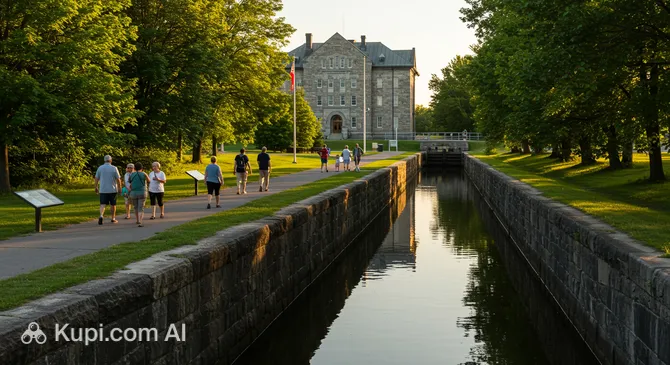
Sault Ste. Marie Canal National Historic Site. Illustration.
Source: Kupi.com AI

Traveler photos:

Strolling through the grounds, it is impossible not to notice the majestic old buildings constructed from red sandstone, which was quarried directly from the riverbed during construction. These walls once housed the administration, a blacksmith shop, and a powerhouse. The canal went down in history thanks to its electric lock control system, which in 1895 was considered the most modern and large-scale in the world.

Today, it is not just a hydraulic structure, but a true open-air museum. The original mechanisms have been carefully preserved, and the visitor center offers tourists a fascinating plunge into the region's past. The site is included in the list of national historic sites and is a must-see for anyone interested in the history of technology and architecture.

Contacts

To clarify visit details or organize group tours, you can use the official contact information of the site administration.

How to contactContact
Address1 Canal Dr, Sault Ste. Marie, ON P6A 6W4, Canada
Phone+1 705-941-6262
Websitepc.gc.ca

What to Do

A visit to the canal offers guests many leisure options—from peaceful walks to fascinating observation of the machinery in action. One of the main highlights is the preserved 19th-century buildings; you can examine the red sandstone masonry and the original lock gates in detail, which are still in excellent condition.

In the warmer months, boat tours are a must. On board a vessel, you can personally experience the locking process and see how massive volumes of water raise or lower the craft. For those who prefer to stay on land, scenic paths are laid out along the canal, equipped with information panels telling the story of each stage of the site's construction and operation.

Be sure to stop by the visitor center, which features interactive exhibits and rare historical photographs. This is a great spot for photography enthusiasts—the combination of industrial power, historic architecture, and natural river views makes the canal one of the most photogenic points in the city. The area is also perfect for quiet relaxation and outdoor picnics surrounded by living history.

Getting There

Finding this unique historic monument is easy: it is located at 1 Canal Dr, Sault Ste. Marie, ON P6A 6W4. If you are traveling by car, your main landmark will be the Trans-Canada Highway 17, which connects the city with other major centers in the country.

For those arriving in the city by public transport—such as a bus or train from Toronto or Sudbury—the most convenient way to reach the canal itself is by taxi. The ride from the city center takes only 10–15 minutes. During the warmer months, many tourists and locals prefer to get here by bicycle, using the city's network of bike paths.

Convenient parking is provided directly on-site for visitors traveling in their own vehicles. Navigator coordinates: 46.5132426, -84.3508986.

Nearest city: Sault Ste. Marie

History & Facts

The history of this site began in the late 18th century when the first lock was built here, though it was destroyed in 1816. The Sault Ste. Marie Canal National Historic Site took its modern form in 1895. It was then that an innovative electric lock system was launched, which was considered the largest and most technologically advanced in the world at the time of its opening.

Interestingly, the engineering solutions applied here influenced global shipping. The locks of this canal served as a sort of prototype for the original designs of the Panama Canal. Prominent engineers Alfred Noble and Joseph Ripley worked on the project, and their developments ensured the reliability of the waterways for decades to come.

Long before the arrival of Europeans, this region was the homeland of the Ojibwe people. They called this place Baawitigong, which means "Place of the Rapids." The first French explorers and Jesuit missionaries appeared here in the 17th century, naming the rapids after Saint Mary. Subsequently, the canal became a vital artery for the fur trade and the industrial development of all North America.

In 1987, the canal was closed for a major reconstruction that lasted ten years. During the work, the lock mechanics were completely modernized, allowing the historic site to be preserved in working condition and transformed into one of the most significant attractions in the province of Ontario.

Time Needed

When planning a visit to the locks, you should allow for approximately 1–2 hours of free time. This is quite enough to take a leisurely stroll along the water, study the information boards, and inspect the preserved historic red sandstone buildings.

If you decide to visit the visitor center to see the museum exhibits or take a boat tour through the locks during the summer, your stay may be longer. Nevertheless, the site is ideal for both a quick educational stop and a relaxed break in the fresh air.

Working Hours

The National Historic Site welcomes visitors during the work week. Please note that access to the main exhibits and the visitor center may be limited on weekends.

Opening Hours:
Monday — Friday: 10:00 AM – 5:00 PM;
Saturday and Sunday: Closed.

DayWorking hours
Monday10:00 – 17:00
Tuesday10:00 – 17:00
Wednesday10:00 – 17:00
Thursday10:00 – 17:00
Friday10:00 – 17:00
SaturdayClosed
SundayClosed

Nearby

Exploring the area around the canal will allow you to dive even deeper into the atmosphere of this border region and discover new facets of its history. A walk through the adjacent territories will reveal views of industrial monuments and memorials dedicated to the cultural heritage of Indigenous peoples.

NameDistance
The Whisky Barrel0.9 km
Soo Locks1.1 km
Memorial Gardens1.1 km
Soo Locks Visitor Center1.3 km
The Palace Mexican Restaurant & Saloon1.4 km
Bird's Eye Outfitters1.5 km
Là Anh Vietnamese Lounge1.6 km

Reached the end of the page?

That means the route is fully explored